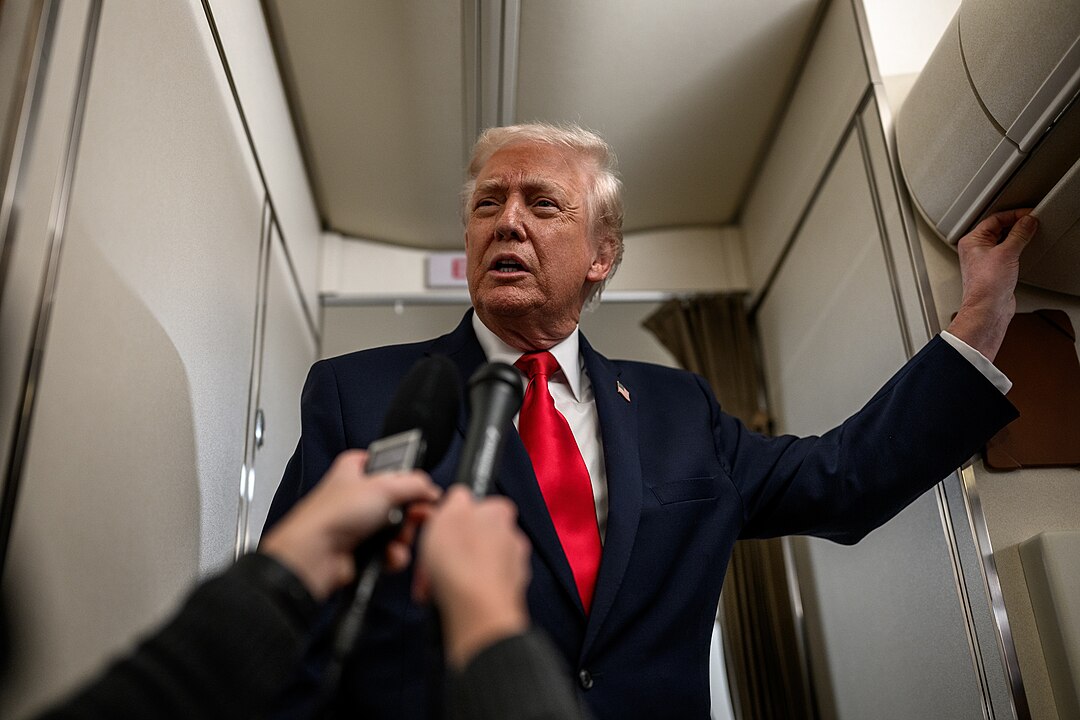
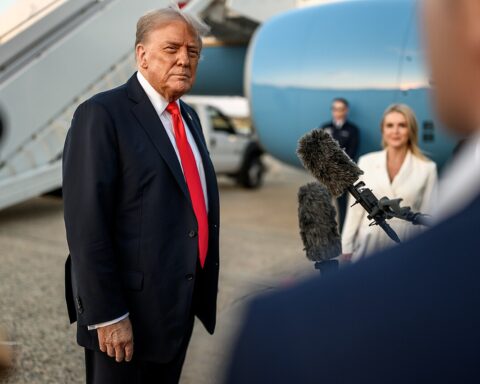
President Donald Trump announced Tuesday that he is abandoning his proposal to charge a 20% reimbursement fee on cargo moving through the Strait of Hormuz, saying Gulf nations have instead agreed to pursue major trade and investment deals with the United States.
The change comes just one day after Trump proposed the fee as a way to offset the cost of protecting one of the world’s busiest maritime trade routes. While the reimbursement plan has been shelved, the administration said it will continue enforcing a blockade targeting Iranian shipping.
Blockade to Remain Focused on Iran
In a Truth Social post, Trump declared that the Strait of Hormuz would remain open to international commerce—except for vessels connected to Iran.
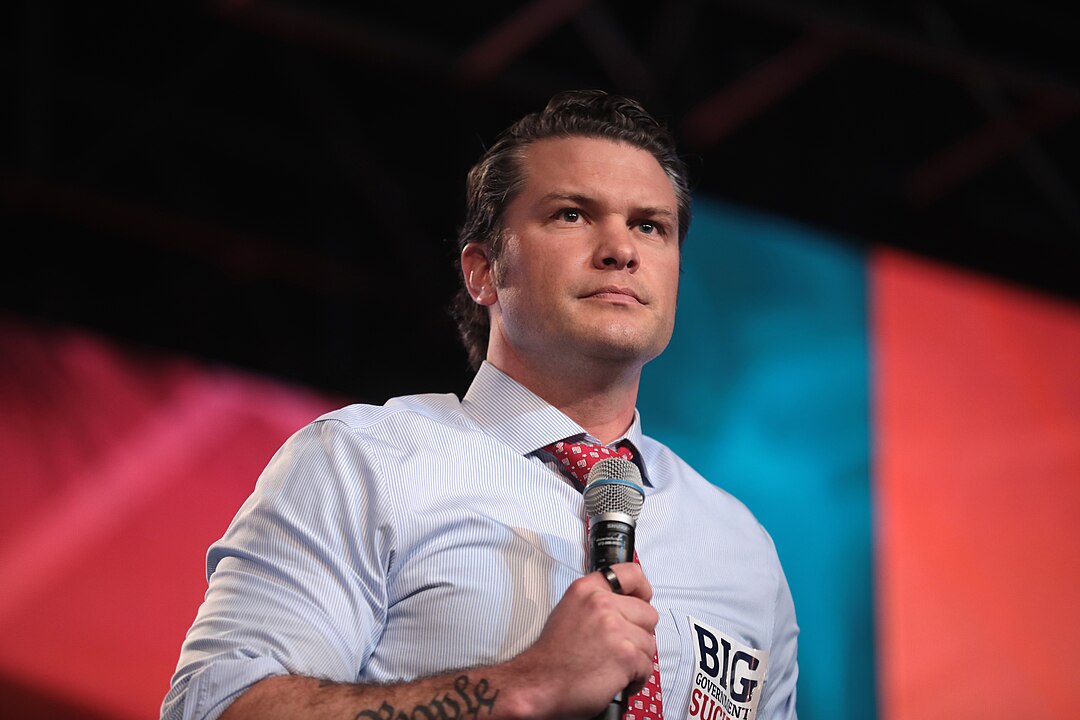
“Oil is flowing like never before, thanks to the awesome Power of the United States Military,” Trump wrote, crediting Secretary of War Pete Hegseth, Chairman of the Joint Chiefs of Staff Gen. Dan Caine, CENTCOM Commander Adm. Brad Cooper, and U.S. service members.
“The Hormuz Strait is open to ALL Ship traffic except for Iran,” Trump added, blaming Tehran’s “lying, violent, malicious leadership” for placing the country on a path toward “TOTAL DESTRUCTION.”
Under the revised policy, the United States will maintain what Trump described as a “FULL Blockade,” but only against ships traveling to or from Iranian ports or transporting Iranian cargo.
“We will therefore have a FULL Blockade, but only on Ships coming to and from Iranian ports, or carrying anything have to do with Iranian cargo,” he wrote.
Trade Deals Replace Transit Fee
Trump said the decision to abandon the proposed 20% cargo fee followed discussions with leaders across the Gulf region.
“Based on highly productive conversations with Middle East leadership, I have decided to replace the 20 percent United States Reimbursement Fee with Trade and Investment Deals that the various Gulf States will be making into the United States,” Trump wrote.
He described the anticipated investments as “MASSIVE,” arguing they would benefit both the United States and America’s Gulf partners.
“As everyone is aware, we have the largest Dollar Investment into the United States, of any Country in History, but these new Investments will make that Number even larger,” Trump said. “We will see Factories, Plants, and Equipment pour into the United States at Historic levels, which will create additional millions of High Paying AMERICAN Jobs!”
The president concluded by declaring, “America is WINNING again, winning like never before,” while reiterating one of his administration’s central national security objectives.
“The days of Iran killing hundreds of thousands of people, including 52,000 protestors, are OVER and, most importantly, IRAN WILL NEVER HAVE A NUCLEAR WEAPON!”
Military Campaign Continues
The policy shift comes as the United States continues military strikes against Iran following the collapse of a ceasefire.
According to U.S. Central Command, American forces recently completed a five-hour operation targeting Iranian coastal defense systems, missile launch sites, drone facilities, and maritime assets.
CENTCOM said strikes hit military targets in Bushehr, Chah Bahar, Jask, Konarak, Abu Musa, and Bandar Abbas, with the stated objective of degrading Iran’s ability to threaten commercial shipping through the Strait of Hormuz.
Trump has repeatedly said the United States will serve as the “guardian” of the strategic waterway, through which roughly one-fifth of the world’s oil supply passes.
Shift in Strategy
Trump originally announced the proposed 20% reimbursement fee on Monday, arguing that nations benefiting from American protection of commercial shipping should help cover the costs.
The proposal followed a sharp decline in maritime traffic after Iranian attacks on commercial vessels raised concerns about freedom of navigation through the strait. Oil prices climbed roughly 4% following the escalation, while analysts warned that prolonged disruptions could place additional pressure on global energy markets.
By replacing the transit fee with investment commitments from Gulf allies, the administration appears to be shifting toward an economic approach designed to strengthen ties with regional partners while attempting to isolate Iran through targeted maritime restrictions.
The revised policy leaves commercial shipping for most countries unaffected while maintaining pressure on Tehran as the broader U.S. campaign against Iran continues.
READ NEXT: Trump Reveals Plans to Partner With Iran to Manage Hormuz