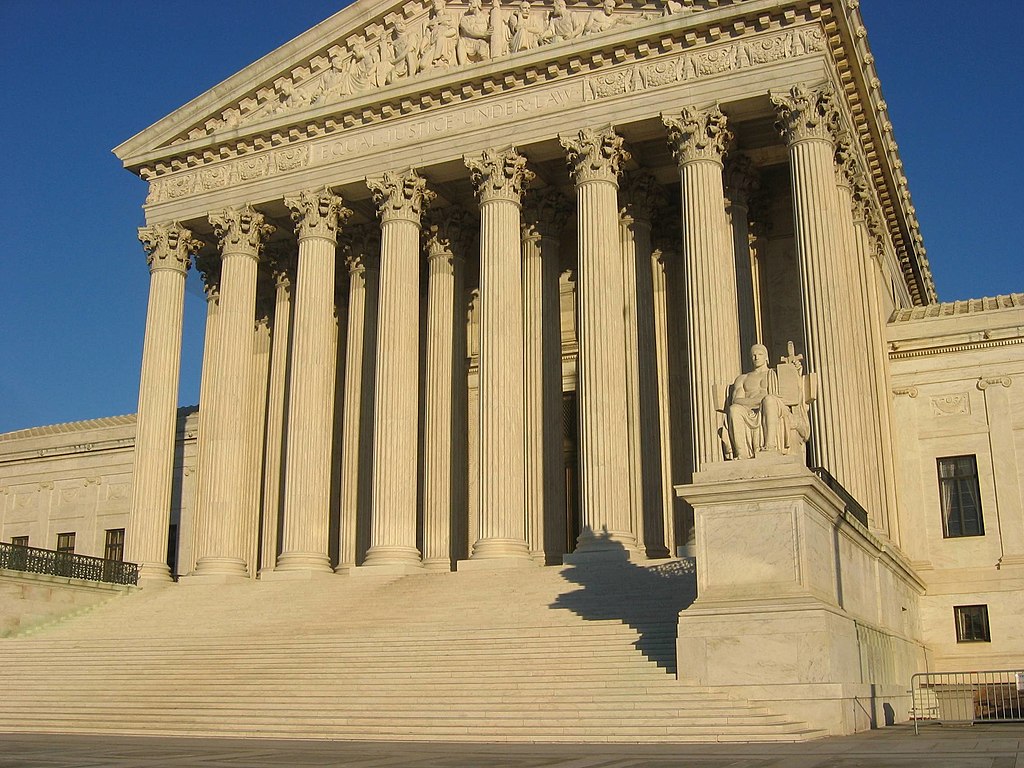
President Donald Trump’s effort to keep construction moving on his White House ballroom now rests with the Supreme Court, where a preservation group is urging the justices to reject the administration’s emergency request before a Friday deadline.
The National Trust for Historic Preservation filed its response Tuesday, arguing that the administration is attempting to finish the project before courts can fully review whether Trump had the authority to begin construction.
“Petitioners, however, insist they will keep building — no matter what anyone says,” the group’s lawyers wrote, according to The Hill.
The Trump administration wants the Supreme Court to keep a lower court injunction on hold while it prepares a full appeal. Without intervention from the justices, the order blocking most above-ground construction is scheduled to take effect Friday, Aug. 21.
Trump Administration Cites Security Risks
In its emergency application, the administration called the injunction “extraordinary and unlawful” and said the new East Wing complex is “vitally required by national security.”
Solicitor General D. John Sauer argued that the ballroom cannot be separated from the military, medical and security facilities being built beneath and around it. The planned structure includes hardened concrete, missile-resistant columns, military-grade ventilation, bomb shelters, medical facilities, protective glass and a rooftop drone port, according to the filing.
The government also said the project would provide a secure gathering place for the president, senior officials and visiting foreign leaders during emergencies or attacks.
Administration officials contend the threat environment surrounding Trump has become increasingly dangerous. Their Supreme Court filing cited recent shootings, alleged assassination plots, drone threats and a reported threat against Air Force One.
The administration said construction is approximately 65 percent complete, with a 250-person crew working 20 hours a day, seven days a week. The concrete-and-steel structure reportedly extends five stories underground and rises roughly 70 feet above ground.
Officials warned that suddenly stopping work could leave the unfinished structure unstable, expose completed portions to weather damage and create operational problems for the Secret Service.
The White House originally announced the project in July 2025 as an approximately $200 million, privately funded ballroom capable of seating 650 guests. Trump has since estimated that private donations will cover roughly $400 million in construction costs.
Preservationists Say Congress Must Decide
The National Trust disputes the administration’s contention that the entire project must continue for security reasons.
Its lawyers noted that the existing injunction permits underground military and security construction to proceed. The order also allows above-ground work that is strictly necessary to cover or protect those facilities.
The group argued in its Supreme Court response that the administration has not demonstrated an urgent need to continue building the ballroom itself while the litigation moves forward.
“If Petitioners believe there is a pressing need for a ballroom, nothing prevents them from asking Congress for one,” the group wrote.
The dispute follows a 2-1 decision from the U.S. Court of Appeals for the District of Columbia Circuit. The appeals court ruled that Trump likely needed express congressional authorization for the 90,000-square-foot project, even if private donations were financing the ballroom.
The majority concluded that federal law gives Congress control over the construction of buildings on federal parkland in Washington. It rejected the administration’s argument that existing laws governing White House maintenance and National Park Service property already supplied the necessary authority.
The Trump administration maintains that presidents have historically directed major White House renovations without seeking project-specific approval from Congress. It also argues that the National Trust lacks legal standing to bring the lawsuit.
Trump Escalates His Criticism
Trump has repeatedly attacked the organization behind the case and accused it of forcing the administration to disclose sensitive details about the project’s planned defenses.
In a Truth Social post Friday, Trump labeled the group “TREASONISTS” and claimed the lawsuit had revealed “Top Military Secrets,” The Hill reported.
The National Trust, however, says the administration chose to place those details in public court filings as part of its effort to portray the entire project as a national security necessity.
What Happens Next
The administration may submit a reply to the preservation group’s filing. Because the dispute is on the Supreme Court’s emergency docket, the justices could issue an interim decision as soon as this week.
That order would determine whether above-ground construction may continue while the administration pursues a formal appeal. It would not necessarily resolve the underlying question of whether Trump possessed the legal authority to launch the project without separate congressional approval.
If the Supreme Court agrees to hear the full case, the National Trust has said it would not oppose an expedited schedule that could produce oral arguments this fall and a final decision by next summer.
For now, the immediate question is whether the justices will allow Trump to keep building—or let the construction restrictions take effect Friday.