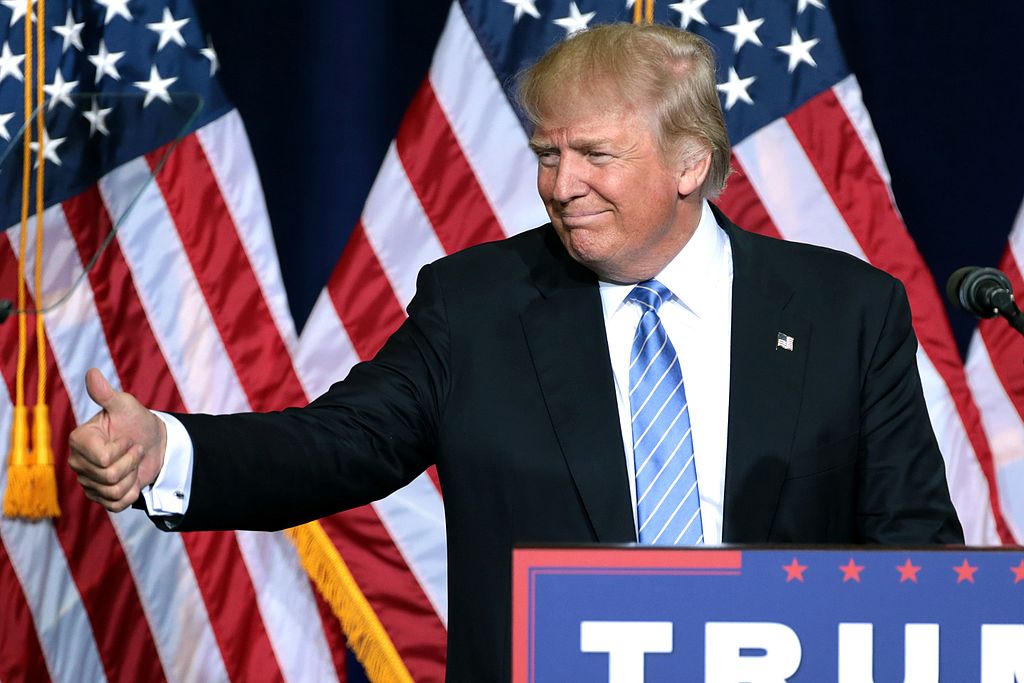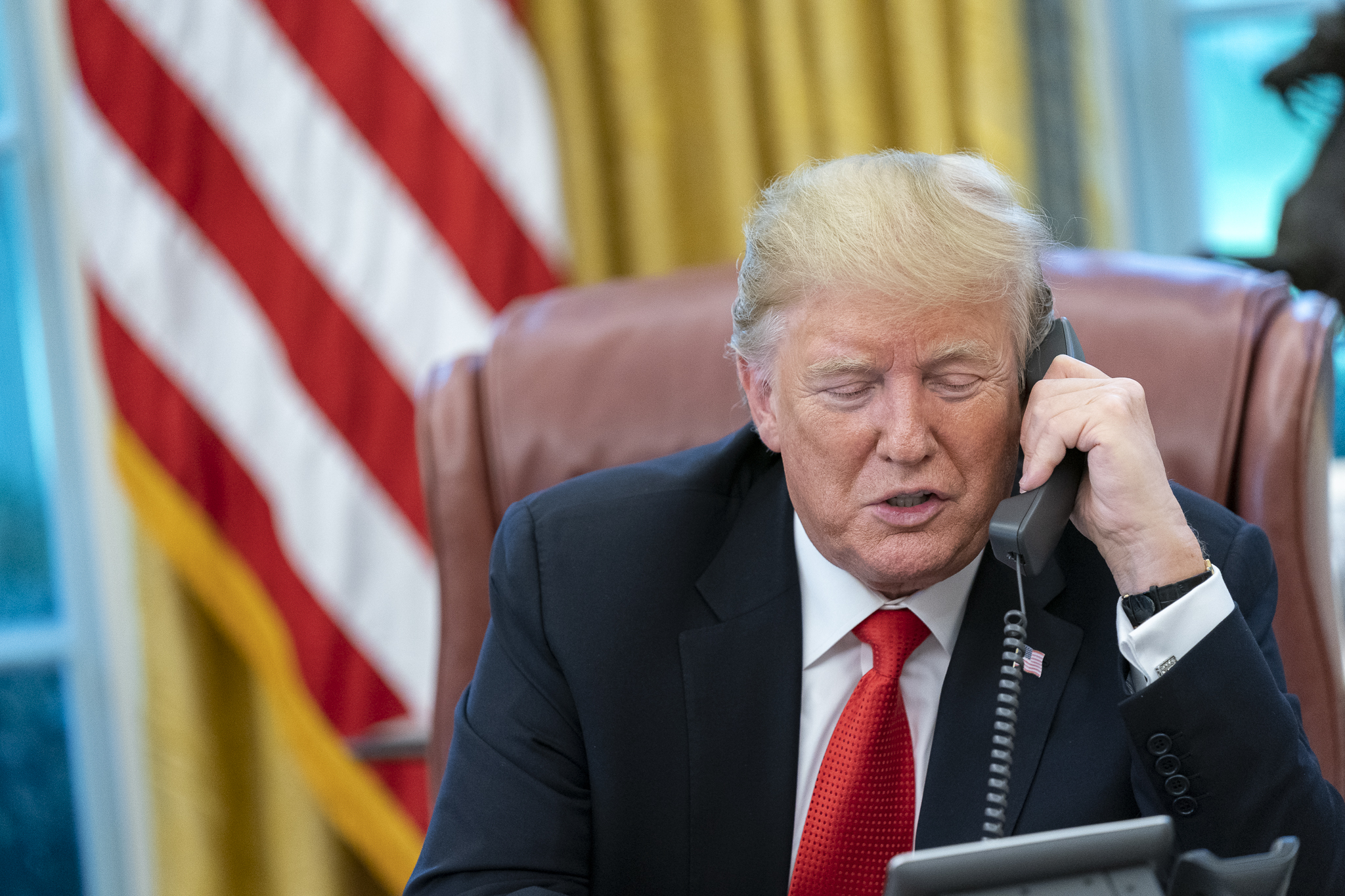
President Donald Trump surprised NASA officials Sunday by calling into a live press conference moments after the successful launch of the Nancy Grace Roman Space Telescope.
NASA Administrator Jared Isaacman briefly stepped away from the postlaunch briefing while holding his cellphone and told reporters, “The president is excited about Roman.”
Isaacman returned moments later and placed Trump on speakerphone, allowing the president to address the scientists, engineers and other officials gathered at Kennedy Space Center.
“I just want to thank everybody, congratulate you. It looked beautiful on television,” Trump said, according to Fox News’ report.
Trump joked that he had called Isaacman to make sure there was not “anything negative” he needed to know about the mission, including whether the telescope might never reach its destination. Isaacman reportedly assured him the launch could not have gone better.
The president then praised Isaacman and the wider NASA team while touting the federal resources behind the agency’s work.
“We’re the hottest in space,” Trump declared. “Let’s keep it all going.”
The unexpected call came after Roman lifted off at 7:26 a.m. EDT aboard a SpaceX Falcon Heavy rocket from Launch Complex 39A in Florida.
According to NASA’s official mission update, controllers began receiving telemetry seven minutes after liftoff. The telescope separated from the rocket approximately 31 minutes into the mission and successfully deployed its solar panels and lower instrument sunshade.
“Roman is exactly the kind of success story we want to see across NASA,” Isaacman said, noting that the telescope was delivered ahead of schedule and on budget.
Roman is now beginning a roughly three-month, nearly 1 million-mile journey to the second Sun-Earth Lagrange point, known as L2.
Once operational, the powerful infrared telescope will help scientists investigate dark matter, dark energy and planets outside the solar system. Its 300-megapixel Wide Field Instrument will allow Roman to survey the universe up to 1,000 times faster than the Hubble Space Telescope, NASA said.
The agency expects to release Roman’s first images in early 2027.
Trump’s call also followed a major space policy announcement from his administration.
Two days before the launch, the president signed an executive order creating a commission tasked with designing the proposed United States Space Academy.
The NASA-led federal academy would combine technical education with leadership training, discipline and public service. Its graduates could pursue careers as astronauts, scientists, engineers, military personnel, civil servants and operators throughout the nation’s rapidly expanding space sector.
Isaacman will chair the commission, which must deliver recommendations to Trump within 120 days. Its report will address the academy’s curriculum, governance, graduate service obligations, permanent location and any legislation required to establish it.
“Given the rapid growth of the U.S. Space Force and commercial space industry,” Trump said during Friday’s signing ceremony, the country will need to train “an entire generation” of new space professionals, according to NASA.