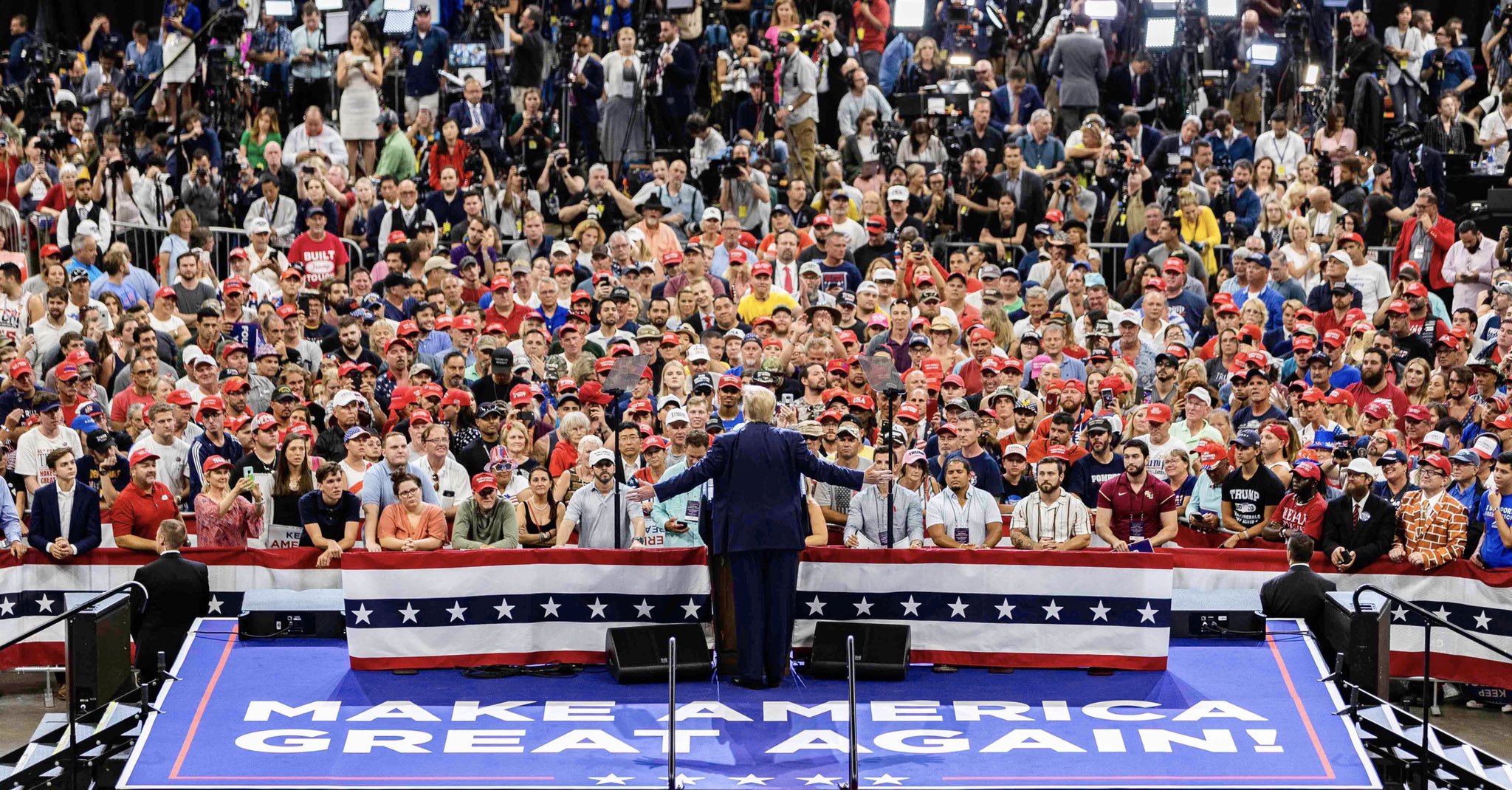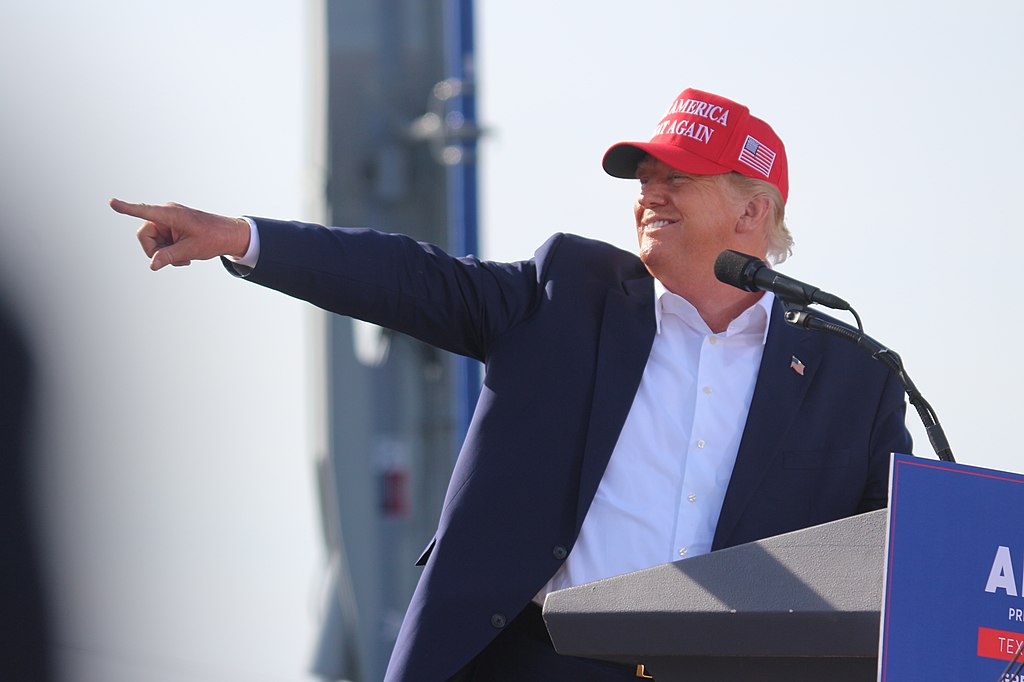
President Donald Trump will return to the campaign trail Wednesday evening in North Carolina, where he is expected to make a direct appeal for Republican Senate nominee Michael Whatley with less than seven weeks remaining before Election Day.
Trump is scheduled to speak at 7 p.m. ET at Gastonia Municipal Airport, according to Axios Charlotte. The appearance will bring the president to a state he carried in three consecutive presidential elections and place him at the center of an open-seat contest that could help determine control of the Senate.
For Whatley, the rally offers a high-profile chance to close both a polling gap and a familiarity gap against Democratic nominee Roy Cooper, the former two-term governor and four-term state attorney general.
Whatley is seeking the seat held by Republican Sen. Thom Tillis, who announced last year that he would not run for a third term after clashing with Trump. Whatley previously chaired both the North Carolina Republican Party and the Republican National Committee, but the 2026 campaign is his first run for public office.
Trump encouraged Whatley to enter the race after Lara Trump, the president’s daughter-in-law and Whatley’s former RNC co-chair, decided against a campaign of her own. In a July 2025 Truth Social post reported by the Carolina Journal, Trump praised Whatley’s positions on the border, crime, taxes, the military and gun rights before adding, “I need him in Washington, and I need him representing YOU!”
The relationship between the two men stretches well beyond this campaign. Trump backed Whatley to lead the RNC, and Whatley helped oversee the national party during Trump’s successful 2024 presidential campaign. That history has made Whatley one of the president’s most closely aligned Senate candidates this cycle.
Wednesday’s rally also marks Trump’s first campaign event since the Republican Party’s inaugural midterm convention in Dallas last week. Speaking there, Trump acknowledged that the North Carolina contest presented a challenge.
“In North Carolina, you have a little more difficult case, because people don’t quite get it, but they’re going to find out,” Trump said during his keynote address.
The latest Elon University Poll illustrates the task facing Whatley. The survey found Cooper leading 49% to 38% among likely voters, with 8% undecided and Libertarian and Green Party candidates receiving 2% each. The poll was conducted Aug. 21-31 and carried a margin of error of plus or minus 5.6 percentage points for likely voters.
The same survey found a substantial difference in voter familiarity. Seventy-one percent of registered voters said they had heard at least some about Cooper, compared with 47% who said the same about Whatley. Fifteen percent said they had heard nothing about Whatley, while 4% said that of Cooper. Elon Poll director Jason Husser said the post-Labor Day stretch gave Whatley an opportunity to raise his profile and narrow the race.
That makes Trump’s visit about more than turning out voters who already support the Republican ticket. It is also an effort to place Whatley before a broader statewide audience as voters begin paying closer attention to the midterms.
The political terrain, however, is complicated by widespread concern about household finances. In the Elon survey, 86% of registered voters called inflation and the cost of living “very important,” while 73% said the same about both the economy and health care. Forty-nine percent gave the national economy a grade of D or F.
Cooper has made affordability the centerpiece of his campaign. During a recent stop in Concord, he argued that the Trump administration had not delivered on its promises to lower prices and said federal policies were making the problem worse, according to Cooper’s campaign. Whatley, meanwhile, has argued that Cooper’s record left North Carolinians with high health-care costs and has emphasized crime, immigration and the tax cuts enacted under Trump.
The competing messages preview the choice both campaigns are trying to frame. Whatley is presenting himself as a reliable partner for Trump who would help advance the president’s agenda in Washington. Cooper is trying to turn the election into a referendum on prices, health care and the administration’s economic record.
Trump remains a formidable political force in North Carolina. He won the state in 2016, 2020 and 2024, and Democrats have not won a North Carolina Senate race since 2008. But the electorate is not defined by either party alone. Unaffiliated voters outnumber registered Democrats and Republicans, making them central to any statewide victory.
Republican pollster Paul Shumaker told the AP that Trump’s appearance should energize Republican voters, but he also said unaffiliated voters are especially focused on the economy and that the White House would need to change the prevailing economic narrative to give Republicans a stronger path in North Carolina.
The campaigns are already treating the race as a national priority. Recent reports indicate that Republican advertising spending in the contest had exceeded $50 million, compared with about $35.2 million on the Democratic side, with Trump-aligned MAGA Inc. and other conservative groups helping give Republicans the overall spending advantage. Cooper, however, has outraised Whatley directly in recent reporting periods.
Trump’s stop in Gastonia therefore serves several purposes at once: energizing the GOP base, expanding Whatley’s name recognition, sharpening the Republican case against Cooper and signaling that the president intends to put his own political capital behind a candidate he recruited.
It also carries risk. The more closely Whatley ties himself to Trump, the more the Senate contest becomes connected to voters’ judgments about the president’s second term. Elon’s survey found 31% of North Carolina adults approving of Trump’s job performance and 54% disapproving, although that question was asked of all adults rather than the poll’s likely-voter sample.
For Trump, the strategy is straightforward: recreate the coalition that delivered North Carolina to him three times and persuade those voters to turn out when his own name is not on the ballot. For Whatley, Wednesday night is an opportunity to share Trump’s stage and begin changing a race in which Cooper currently holds the advantage.
The rally begins at 7 p.m. ET. Trump’s remarks from the Gastonia event had not yet been delivered when this article was prepared.