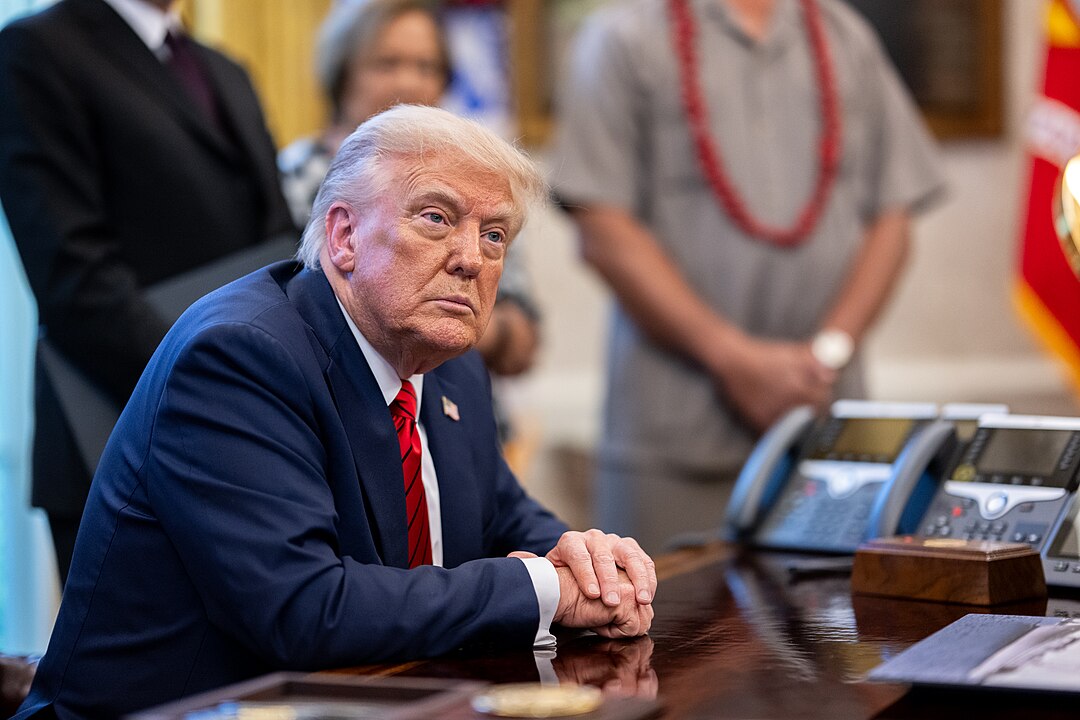
President Donald Trump is set to host executives from U.S. oil refining and fuel distribution companies at the White House on Tuesday, aiming to expand domestic refining capacity and bring down gasoline prices that remain above $4 a gallon amid the ongoing conflict with Iran.
The meeting comes after Trump accused refiners of gouging consumers, called for a Justice Department investigation into the industry, and urged companies to use strong recent earnings to lower pump prices. Gasoline prices have stayed elevated for much of the year, surging after the Iran conflict began in late February and climbing above $4 a gallon in the spring. Heading into Labor Day weekend, prices are at their highest level ever for this point in the year, with the American Automobile Association noting that August is on track to be the most expensive for that month on record.
White House spokeswoman Taylor Rogers said in a statement: “President Trump is laser-focused on ensuring his successful energy dominance agenda translates into the most cost savings possible at the pump for consumers.” She added that the president will discuss ways to increase refining capacity, expand energy production across the supply chain, and lower prices for consumers.
Interior Secretary Doug Burgum confirmed the gathering in a Monday interview on Fox Business, saying Trump will meet with “small, mid-size, and large” U.S. refiners. Discussions will cover supply chain issues and “getting back to a policy where we’re actually supporting refiners as opposed to try to run them out of business,” Burgum said. He noted that a continuing Jones Act waiver has helped lower gasoline prices in the Northeast but pointed to “a series of other red tape and regulations” in states like California that he said are “designed to choke out refining of hydrocarbons in America.”
A White House official said the session will include Burgum, Energy Secretary Chris Wright, National Energy Dominance Council Executive Director Jarrod Agen, and representatives from small, medium, and large refiners and distributors. The administration is focused on “concrete, near-term steps” to increase capacity, as U.S. refiners are operating at nearly 100% of existing capacity, and as more Venezuelan crude reaches U.S. facilities. The meeting will also examine whether lower costs are being passed through to consumers and what additional actions the administration could take to reduce prices at the pump.
Invited companies include Marathon Petroleum, Delek US Holdings, Chevron, PBF Energy, and Valero Energy, according to people familiar with the plans. Exxon, the nation’s third-largest refiner by capacity, was not invited, sources said. The White House did not comment on the attendee list.
Companies received invitations only late last week, with limited details about the event or the full guest list, according to people familiar with the arrangements. That has left some executives weighing whether to send their CEOs. “You want to be at the table, but you also have to think about what could happen once you’re there. You don’t want your CEO to be embarrassed,” one company official involved in advising on attendance said. Another official noted concerns about optics but said the gathering offered a rare chance to raise issues such as the administration’s biofuel policy and the Jones Act directly with the president. “There are certainly concerns about the optics, but you also don’t want to miss an opportunity to have a direct conversation with the president about issues that are important to the industry,” the official said.
There is recent precedent for caution. At a White House meeting in January, Exxon CEO Darren Woods drew Trump’s criticism by calling Venezuela “uninvestable” in its current form. Trump later said he was “inclined to keep Exxon out” of Venezuela, accusing the company of “playing too cute.”
U.S. refiners posted strong second-quarter results as gasoline and diesel margins rose and overseas buyers turned to the United States for fuel amid global supply disruptions. The White House has argued that years of prior policies led to refinery closures and discouraged investment in new facilities and expansions. The administration has already taken steps including Strategic Petroleum Reserve releases, Jones Act waivers, and an early end to summer-blend gasoline requirements to boost supply.
Trump has made cheaper energy a centerpiece of his economic agenda. The Tuesday meeting underscores the administration’s push to translate its energy dominance efforts into tangible relief at the pump for American drivers as midterm elections approach.