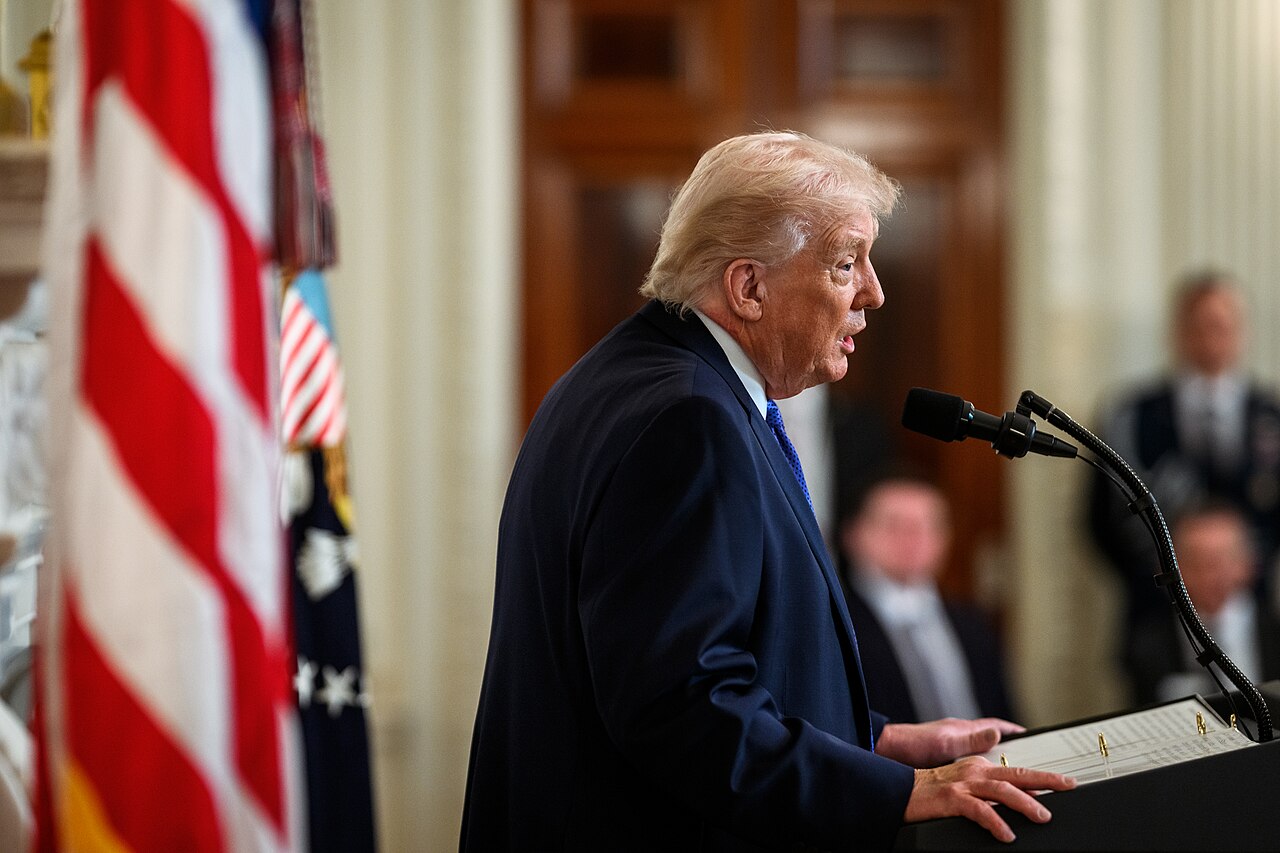
President Donald Trump on Monday awarded the Medal of Honor to three U.S. Army soldiers during a White House ceremony, recognizing acts of extraordinary valor spanning World War II, the Vietnam War and the war in Afghanistan. Two of the honors were presented posthumously.
The ceremony took place at a moment of heightened international tension, just two days after the United States and Israel launched coordinated strikes on Iranian targets. Over the weekend, Trump called for regime change in Tehran and warned of potential American casualties in a video posted online, underscoring the renewed focus on U.S. military operations abroad.
During the ceremony, Trump honored:
Retired Command Sgt. Maj. Terry P. Richardson, recognized for his actions during the Vietnam War. Richardson was credited with saving the lives of 85 fellow service members during intense combat operations. His leadership and bravery under fire, according to military accounts, prevented further casualties and stabilized his unit during a critical engagement.
Master Sgt. Roderick W. Edmonds, who died in 1985, was recognized for his heroism as a prisoner of war during World War II. While held in a German POW camp during the Battle of the Bulge, Edmonds defied Nazi demands to identify Jewish American soldiers under his command, instead declaring that all captured U.S. troops were Jewish. His resistance is widely credited with protecting fellow soldiers from likely execution.
Staff Sgt. Michael H. Ollis, who was killed in Afghanistan in 2013, received the nation’s highest military decoration for valor in combat. Ollis died while shielding a Polish officer from a suicide bomber during a joint patrol in Ghazni province, actions that military officials said exemplified selfless courage and alliance solidarity.
The Medal of Honor is the highest military award presented by the United States government for acts of valor above and beyond the call of duty. Established during the Civil War, it has been awarded to fewer than 3,600 service members in U.S. history.
Monday’s event marked the third Medal of Honor ceremony of Trump’s current term. Last week, he awarded two Medals of Honor during his State of the Union address, an unusual setting for the presentation, which traditionally occurs in a dedicated White House ceremony.
The timing of Monday’s awards — coming amid escalating rhetoric toward Iran and renewed public attention on U.S. military engagement — placed a spotlight on both historical acts of heroism and the broader role of the armed forces in current geopolitical conflicts.
The White House framed the ceremony as a tribute to “American valor across generations,” highlighting service members whose actions, in vastly different wars, were described as embodying duty, sacrifice and moral courage.