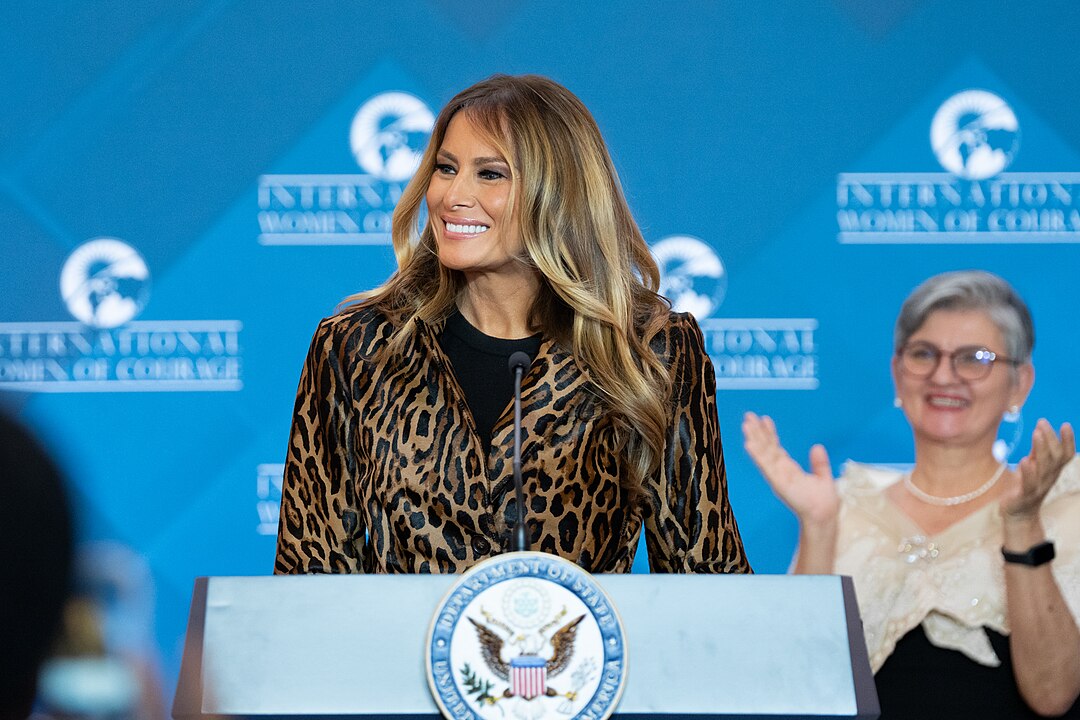
Melania Trump is highlighting a milestone in the federal government’s effort to combat abusive AI content, praising the first conviction under the Take It Down Act — a law aimed at cracking down on nonconsensual sexually explicit deepfakes and related cybercrimes.
“Today marks the first conviction under the Take It Down Act – protecting victims from non-consensual AI-generated sexually explicit images, cyberstalking, and threats of violence,” the first lady wrote in a post on X. “Thank you U.S. Attorney Dominick S. Gerace II for protecting Americans from cybercrimes in this new digital age.”
The case centers on James Strahler, a 37-year-old man from Columbus, Ohio, who pleaded guilty Tuesday to a series of cyber offenses involving both real and AI-generated explicit images, along with violent threats, according to the Justice Department.
Prosecutors say Strahler used an array of AI tools — installing more than two dozen platforms and over 100 web-based models — to create and distribute explicit content targeting at least six adult women. Victims received manipulated nude images of themselves through texts, calls, and online posts.
Authorities also allege that Strahler generated and distributed obscene AI content involving minors, using the faces of boys from his community. Hundreds of these images and videos were posted to a child sexual abuse website.
“We will not tolerate the abhorrent practice of posting and publicizing AI-generated intimate images of real individuals without consent,” said U.S. Attorney Dominick S. Gerace II. “And we are committed to using every tool at our disposal to hold accountable offenders like Strahler, who seek to intimidate and harass others by creating and circulating this disturbing content.”
The conviction comes less than a year after President Trump signed the Take It Down Act into law. The legislation criminalizes the distribution of sexually explicit deepfake content and requires websites to remove such material within 48 hours of a victim’s request.
Melania Trump had been a vocal advocate for the measure, tying it to her broader focus on children’s well-being and online safety.
The case now serves as an early test of the law’s enforcement — and a signal that federal authorities intend to pursue AI-driven abuse aggressively as the technology continues to evolve.