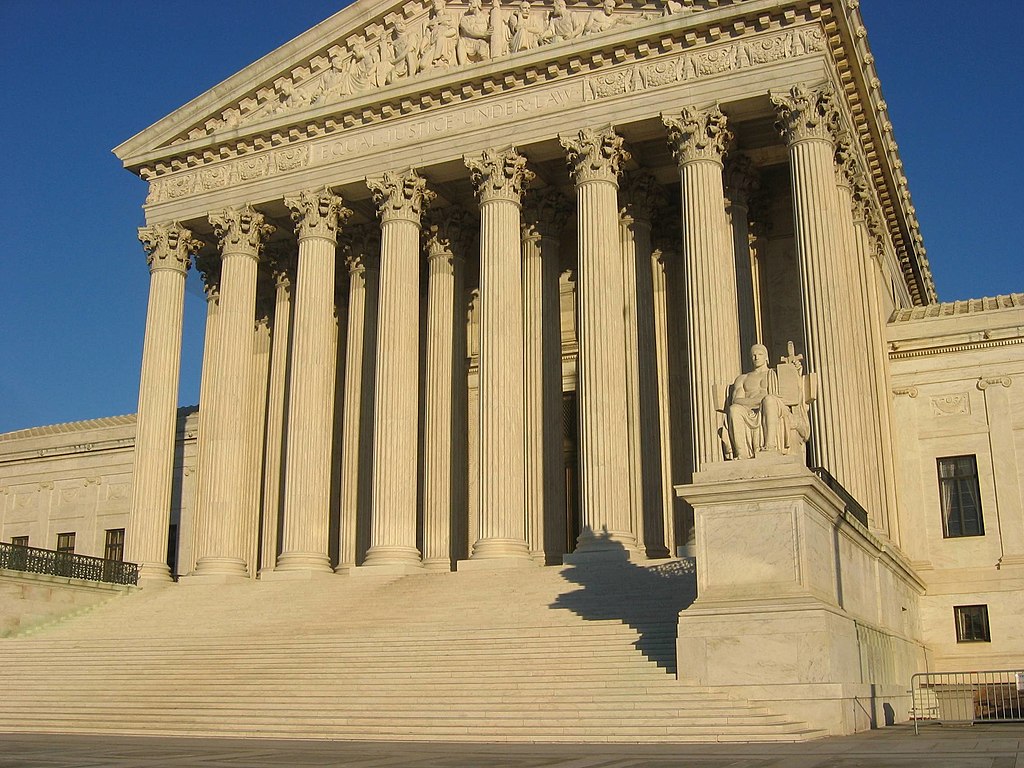
President Donald Trump suffered one of the biggest judicial setbacks of his second term Tuesday after the Supreme Court struck down his executive order ending automatic birthright citizenship for children born in the United States to illegal immigrants and many temporary visa holders.
The 5-4 ruling blocks one of Trump’s signature Day One immigration actions and preserves the longstanding interpretation of the 14th Amendment’s Citizenship Clause.
Chief Justice John Roberts authored the majority opinion, joined by Justice Amy Coney Barrett and the court’s three liberal justices. Justice Brett Kavanaugh dissented on the constitutional question but agreed the order could not take effect under existing federal law.
Trump’s Day One Order Rejected
Trump signed the executive order within hours of returning to the White House, arguing that birthright citizenship has been misinterpreted for decades and serves as an incentive for illegal immigration and so-called “birth tourism.”
The order would have required that a child born in the United States have at least one parent who is either a U.S. citizen or lawful permanent resident to automatically receive citizenship.
The administration maintained that the Constitution’s requirement that a person be “subject to the jurisdiction” of the United States does not extend to children whose parents entered the country illegally or are in the U.S. temporarily.
Lower federal courts quickly blocked the policy, setting up a legal battle that ultimately reached the Supreme Court.
Supreme Court Reaffirms Existing Precedent
Writing for the majority, Roberts concluded that the Citizenship Clause of the 14th Amendment guarantees citizenship to nearly everyone born on U.S. soil.
The opinion relied heavily on the Supreme Court’s 1898 decision in United States v. Wong Kim Ark, which has long been understood to establish birthright citizenship except in limited circumstances, such as children born to foreign diplomats or enemy occupying forces.
The ruling means Trump’s executive order cannot be enforced, leaving the current interpretation of birthright citizenship unchanged.
Trump Long Expected Tough Fight
The president made no secret that he viewed the case as one of the most important legal battles of his presidency.
Trump became the first sitting president in modern history to attend Supreme Court oral arguments in one of his administration’s own cases when he watched proceedings in April.
Following the hearing, he acknowledged publicly that the administration faced a difficult path before the justices but expressed hope the Court would revisit its interpretation of the 14th Amendment.
White House Defended Policy
Throughout the litigation, White House officials insisted the administration’s legal position was grounded in the original meaning of the Constitution.
Press Secretary Karoline Leavitt repeatedly argued that the current understanding of birthright citizenship goes beyond what the framers of the 14th Amendment intended. Senior adviser Stephen Miller likewise defended the executive order as a necessary component of the administration’s broader immigration agenda.
As of Tuesday afternoon, the White House had not issued a formal statement responding to the decision.
What’s Next?
The ruling effectively ends Trump’s effort to restrict birthright citizenship through executive action.
While the administration could ask Congress to pursue legislation or support a constitutional amendment, Tuesday’s decision makes clear that the Supreme Court believes any fundamental change to birthright citizenship cannot be accomplished by presidential order alone.