President Donald Trump said Tuesday that he plans to send his administration’s controversial Iran agreement to Congress for approval, a move that could trigger a high-profile battle on Capitol Hill as lawmakers from both parties demand answers about the deal’s contents.
Speaking during a bilateral meeting with United Arab Emirates President Sheikh Mohamed bin Zayed Al Nahyan, Trump appeared receptive to the idea after being asked whether Congress should review the agreement.
“I wouldn’t mind,” Trump told reporters. “I mean, you know, the Democrats – we call them Dumocrats because they’re dumb people. The Democrats are… Well what I’d like to do is send it to Congress, saying you shouldn’t approve it, and I’ll get it approved, whatever they, whatever I say, they want to do the opposite. It’s not working too well for them, by the way.”
“But yeah, I never thought about sending, never even thought about it, but I will. I will send it to Congress,” Trump added. “I like the idea.”
The memorandum of understanding (MOU), which Trump and Vice President J.D. Vance signed Sunday, has not yet been publicly released, fueling speculation across Washington and prompting calls for greater transparency from lawmakers. The announcement nevertheless helped boost financial markets, with investors betting the agreement could reduce tensions in the Middle East and stabilize energy markets.
Questions Remain About What’s Actually in the Deal
Administration officials have repeatedly insisted that Iran has agreed not to pursue a nuclear weapon and that no financial benefits will be provided until Tehran fulfills its commitments. Senior officials have described the agreement as a framework that would lead to more detailed negotiations over Iran’s nuclear program, enforcement mechanisms, inspections, and the disposition of enriched uranium.
Reports have also circulated that the agreement could eventually provide Iran access to as much as $300 billion in reconstruction and development funding, though the White House has stressed that the money would not come from American taxpayers and would be contingent on Iranian compliance. Some reports indicate Gulf nations could play a significant role in financing those efforts.
The agreement reportedly includes provisions reopening the Strait of Hormuz, lifting economic pressure on Iran if benchmarks are met, and establishing a 60-day negotiating period to finalize nuclear-related details.
Republicans Want Answers
Despite broad support among Republicans for Trump’s recent military actions against Iran, many GOP senators have stopped short of endorsing the agreement itself.
Sen. Lindsey Graham (R-S.C.), one of Trump’s strongest allies in Congress and a vocal supporter of Operation Epic Fury, said lawmakers need to examine the actual text before making judgments.
“The MOU, I want to see it myself. The way Iran describes it is awful. The way we describe it makes sense to me. Let’s look at it and see what it actually is,” Graham said.
Other Republican senators have likewise expressed concern over the lack of public details and have emphasized that any long-term arrangement with Iran should receive congressional scrutiny.
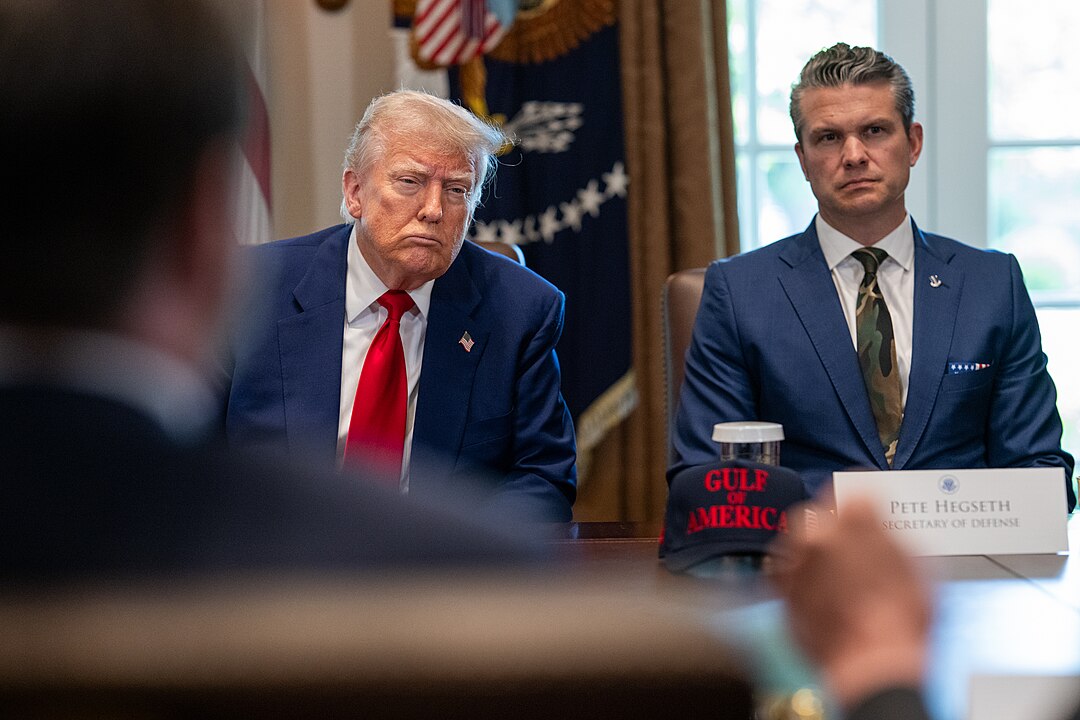
Adding to the uncertainty, several senior administration officials have reportedly raised concerns behind closed doors about whether Iran will ultimately follow through on its commitments. CIA Director John Ratcliffe, Secretary of State Marco Rubio, and Defense Secretary Pete Hegseth have all reportedly expressed skepticism about Tehran’s intentions during internal discussions.
Congress May Already Have a Role
Trump’s comments come as lawmakers debate whether congressional review is already required under the Iran Nuclear Agreement Review Act (INARA), a bipartisan law passed in 2015 after the Obama administration negotiated the original Iran nuclear deal.
Under INARA, Congress must receive any qualifying nuclear agreement with Iran within five days of its completion and is granted a review period during which lawmakers can vote on a resolution of disapproval.
The law became one of the central mechanisms used by Congress to scrutinize the Obama-era nuclear agreement, which Trump withdrew from in 2018 after calling it a “horrible one-sided deal.”
Democrats have also begun pressing the administration for more information. Senate Minority Leader Chuck Schumer said the public and Congress deserve immediate clarity on the agreement’s terms, arguing that there are currently “more questions than answers.”