The Trump administration has returned to the Supreme Court with a renewed emergency request to immediately enforce new U.S. Postal Service requirements for mail ballots ahead of the November midterm elections.
Solicitor General D. John Sauer filed the latest application Sunday after U.S. District Judge Indira Talwani converted her temporary block of the rules into a preliminary injunction. The injunction prevents USPS from making key portions of the regulations mandatory for elections held on or before Nov. 3.
The administration withdrew its original Sept. 3 application, which challenged Talwani’s temporary restraining order, and filed a new request addressing the broader preliminary injunction issued Friday, according to the Supreme Court docket.
Justice Ketanji Brown Jackson, who handles emergency matters arising from the First Circuit, ordered the states and voting groups challenging the regulations to respond by 4 p.m. Wednesday, Sept. 9.
Administration Warns Of Election Confusion
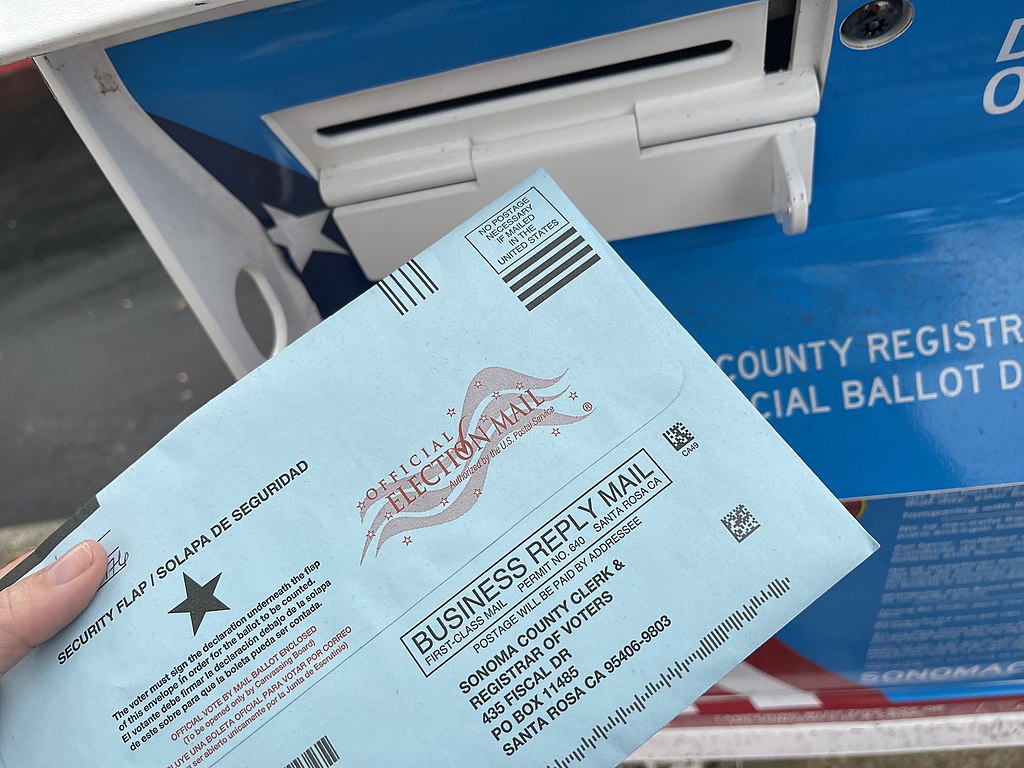
The new USPS regulations require mail-ballot envelopes used in federal elections to display the official Election Mail logo, meet automation standards and carry unique barcodes. State and local election officials would also have to submit their envelope designs for approval and upload each intended recipient’s name, address and barcode information to a federal portal.
Mailings that fail to satisfy the requirements could be returned to election officials for correction and resubmission, according to the final USPS rule.
In its Supreme Court application, the administration characterized the changes as “modest” preparation requirements and argued that USPS has broad authority to establish rules governing material traveling through the federal mail system.
“The Rule’s regulation of the U.S. Mail—not federal elections—is plainly constitutional,” Sauer wrote.
USPS would not independently determine who is eligible to vote. States would continue making eligibility decisions, while postal employees would compare ballot-envelope barcodes with the information election officials entered into the portal.
The administration maintains that the system would help USPS process ballots efficiently, improve tracking and assist authorities in identifying possible election-law violations.
Sauer also urged the justices to move quickly because North Carolina has already begun mailing ballots. Alabama is scheduled to begin Sept. 9, with at least five more states expected to follow during the week of Sept. 13.
The administration argued that keeping the injunction in place could create confusion if states treat compliance as optional, only for the Supreme Court to revive the requirements after ballot distribution has begun.
Judge Finds Rules Likely Unconstitutional
Talwani reached a sharply different conclusion in her 49-page ruling.
The judge found the challengers were likely to prove that USPS had exceeded its statutory authority and intruded upon election powers belonging to Congress and the states. She also warned that forcing states to overhaul established ballot systems shortly before voting begins could prevent eligible Americans from receiving ballots.
“Nothing is hypothetical,” Talwani wrote of the alleged harm facing election officials, voters and advocacy groups.
The lawsuit was brought by more than 20 Democratic-led states, the District of Columbia and several voting-rights organizations. Twelve Republican-led states intervened on the administration’s side.
The challengers contend that election officials do not have enough time to redesign envelopes, secure USPS approval, update their systems and upload millions of voter records without risking delays or rejected mailings. They also argue the regulations amount to an unauthorized federal takeover of responsibilities traditionally handled by states.
Supreme Court Faces A New Question
The Supreme Court previously allowed the administration’s mail-ballot initiative to proceed in a 6-3 ruling on Aug. 24. At that point, however, the USPS regulations had not yet been finalized, and the majority concluded that the earlier challenge depended on speculation about what the agency would ultimately require.
The justices did not decide whether the eventual regulations would be legal.
USPS published its final rule two days later, prompting the states and voting organizations to bring new challenges. Talwani determined that the dispute was now ready for judicial review because the requirements and their potential consequences were no longer speculative.
The latest application therefore presents the justices with a different question: whether the finalized USPS regulations can take effect while the lower-court litigation continues.
A decision could come quickly, with mail-ballot distribution already underway and the November election less than two months away. ABC News first reported Sunday’s renewed emergency appeal.