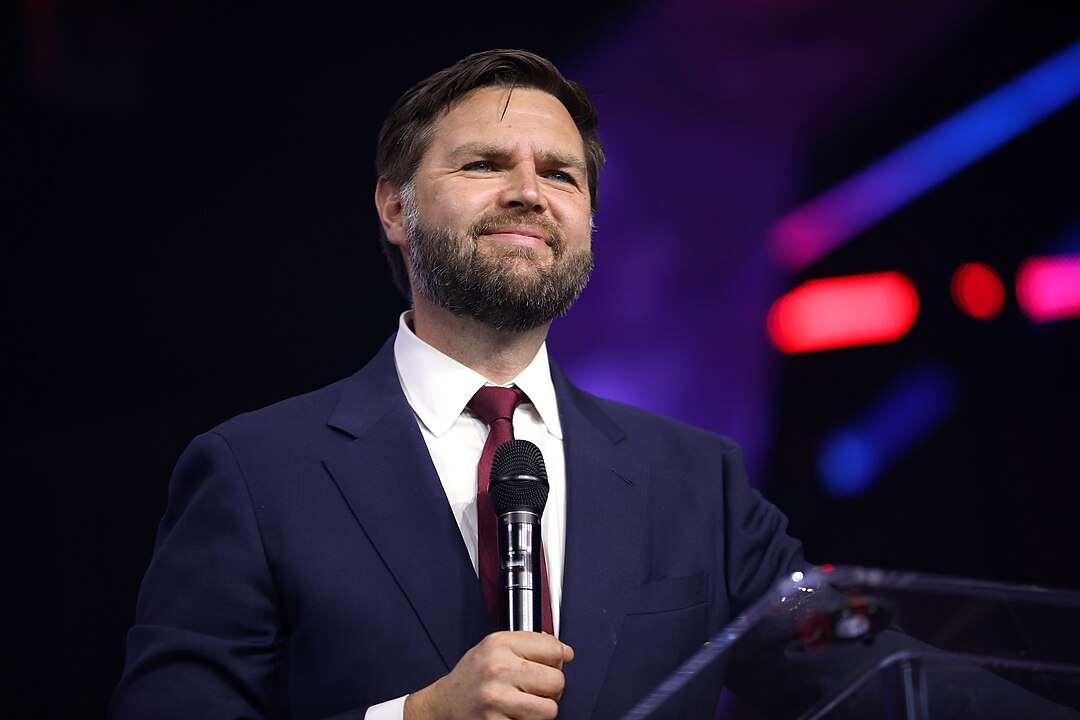
Vice President JD Vance faces one of the most consequential tests of his tenure on Friday as he leads U.S. negotiations with Iran aimed at preserving a fragile ceasefire and turning it into a lasting peace.
The talks carry major implications not only for the remainder of President Trump’s term but also for Vance’s political future. Widely viewed as Trump’s heir apparent, Vance is considered a leading contender for the 2028 GOP presidential nomination.
He has also emerged as a key internal skeptic of the U.S. war in Iran, with reporting indicating he raised concerns even before the conflict began. Vance is generally seen as more cautious about foreign entanglements than Secretary of State Marco Rubio, a potential rival in 2028.
Despite those differences, Vance has remained publicly aligned with Trump, backing the president’s decision to pursue the conflict. Trump has acknowledged their divergence, saying Vance is “philosophically a little bit different” on the issue.
Now, Trump has tasked Vance with helping bring the war to an end. The U.S. and Iran remain divided over key terms, including whether Israel’s ongoing assault on the Iranian-backed militia Hezbollah in Lebanon falls under the ceasefire.
“This is probably the toughest thing he’ll do as vice president,” a former administration official told The Hill. “It’s not going to be easy. These are the toughest negotiators in the world.”
🚨 JUST IN: President Trump posts “WORLD’S MOST POWERFUL RESET” as JD Vance departs for peace talks in PAKISTAN
Sounds like President Trump has high hopes for the peace talks.
Vance is traveling Pakistan’s capital alongside Special Envoy Steve Witkoff and Jared Kushner, the president’s son-in-law on Friday.
Vice President JD Vance said the U.S. delegation is heading to Pakistan with “pretty clear guidelines” from President Trump to negotiate a deal with Iran.
“We’re looking forward to negotiation,” Vance told reporters before departing for Islamabad Friday. “I think it’s going to be positive.”
.@VP departs for Islamabad, Pakistan: "As @POTUS said, if the Iranians are willing to negotiate in good faith, we're certainly willing to extend the open hand. If they're going to try to play us, then they're going to find that the negotiating team is not that receptive." pic.twitter.com/9nNDGsMmId
Iran has not formally announced its delegation, but state media reports that parliamentary Speaker Mohammad Bagher Ghalibaf and Foreign Minister Abbas Araghchi are likely to attend.
The negotiations come at a moment of unusual instability for Iran’s leadership following U.S. operations that killed several top officials.
“The Iranian regime in its current state is in a very different place from what it traditionally is,” said Jacob Olidort of the America First Policy Institute. “They’re trying to reestablish command and control that has been significantly eroded.”
Despite those setbacks, Iran retains leverage through its ability to disrupt the Strait of Hormuz, a critical global oil chokepoint. That threat has already contributed to rising oil prices, adding pressure on the administration ahead of the midterm elections.
Public support for the war remains limited. An Economist/YouGov poll released Wednesday found 34 percent of Americans support the conflict, while 53 percent oppose it. Among Republicans, 67 percent support the war and 21 percent oppose it.