WASHINGTON — President Donald Trump on Saturday signed an executive order directing federal agencies to speed up the review of certain psychedelic substances as potential treatments for mental health conditions, including depression, anxiety, and post-traumatic stress disorder.
The order sets aside $50 million in federal funding to expand access to emerging therapies. It also instructs the Food and Drug Administration to accelerate its evaluation of drugs such as psilocybin and ibogaine, according to NPR.
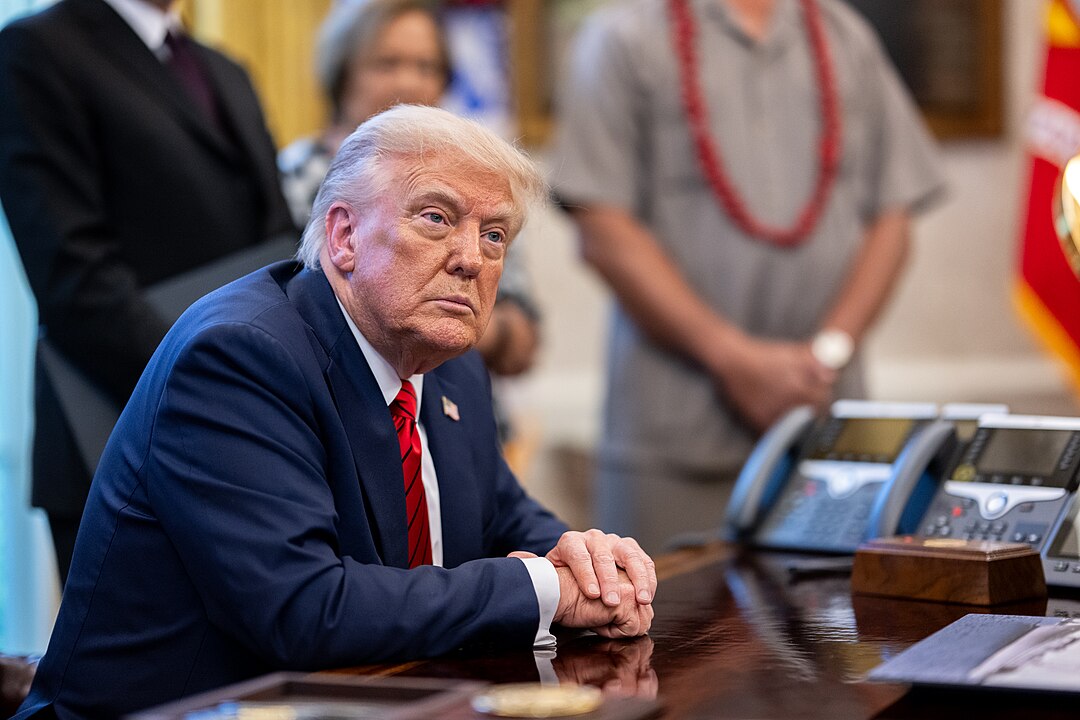
During a signing ceremony in the Oval Office, Trump held up the document and joked, “Can I have some, please?”
Push for Faster Approvals
Federal regulators are expected to move quickly under the directive.
FDA Commissioner Mary Makary said the agency plans to issue national priority vouchers for three psychedelic compounds. That step could allow approvals to come within weeks. If so, it would mark the first time the FDA has fast-tracked psychedelic drugs in this way.
Trump said the order is intended to accelerate efforts to reconsider the current classification of these substances and expressed confidence that approvals could come soon.
Psilocybin and ibogaine are currently listed as Schedule I drugs by the Drug Enforcement Administration, meaning they are considered to have no accepted medical use and a high potential for abuse.
Framed as Mental Health Response
The administration is positioning the move as part of a broader response to the country’s mental health challenges.
The executive order notes that more than 14 million American adults live with a serious mental illness, while about 8 million rely on prescription medication. Officials have also pointed to persistently high suicide rates as a key concern.
Data from the National Institute of Mental Health shows roughly 21 million adults experience at least one major depressive episode each year. About one in 10 adults has been diagnosed with generalized anxiety disorder.
Veterans and Clinical Trials
The order highlights ongoing research involving service members and veterans with PTSD.
The Department of Veterans Affairs is currently participating in at least five clinical trials of psychedelic therapies in New York, California and Oregon. Some supporters say these treatments could offer new options for patients who have not responded to traditional medications.
Former Navy SEAL Marcus Luttrell, whose combat experience was detailed in “Lone Survivor,” spoke at the event and credited such therapies with improving his life.
“You’re going to save a lot of lives through it,” Luttrell said. “It absolutely changed my life for the better.”
Support From Public Figures
The signing ceremony drew a mix of administration officials and public figures.
Among those in attendance were Health and Human Services Secretary Robert F. Kennedy Jr., Centers for Medicare and Medicaid Services Administrator Mehmet Oz and podcast host Joe Rogan.
Rogan said he had previously texted Trump about ibogaine and received a reply supporting FDA approval.
Research History and Renewed Interest
Interest in psychedelics as medical treatments dates back to the 1950s, when early studies suggested possible benefits for addiction and psychiatric disorders. Research largely stopped in the 1960s as recreational use increased and regulations tightened.
In recent years, studies have resumed. A 2025 study published in the Journal of the American Medical Association found that a single dose of LSD could provide relief from anxiety and depression lasting for months.
Ibogaine has also been studied for its potential role in treating certain forms of drug addiction.
Policy Shift
The FDA previously declined to approve MDMA as a treatment for PTSD in 2024, underscoring the regulatory hurdles still in place.
Still, the new executive order signals a shift in federal policy. It reflects a growing willingness to expand research and consider broader therapeutic use of psychedelics as part of efforts to address mental health in the United States.
READ NEXT: Conservative Media Empire Fires Leader In Surprise Move