President Donald Trump predicted Wednesday that the war with Iran will end almost as soon as Americans finish voting in November’s midterm elections, arguing that Tehran is attempting to influence the outcome by prolonging the conflict.
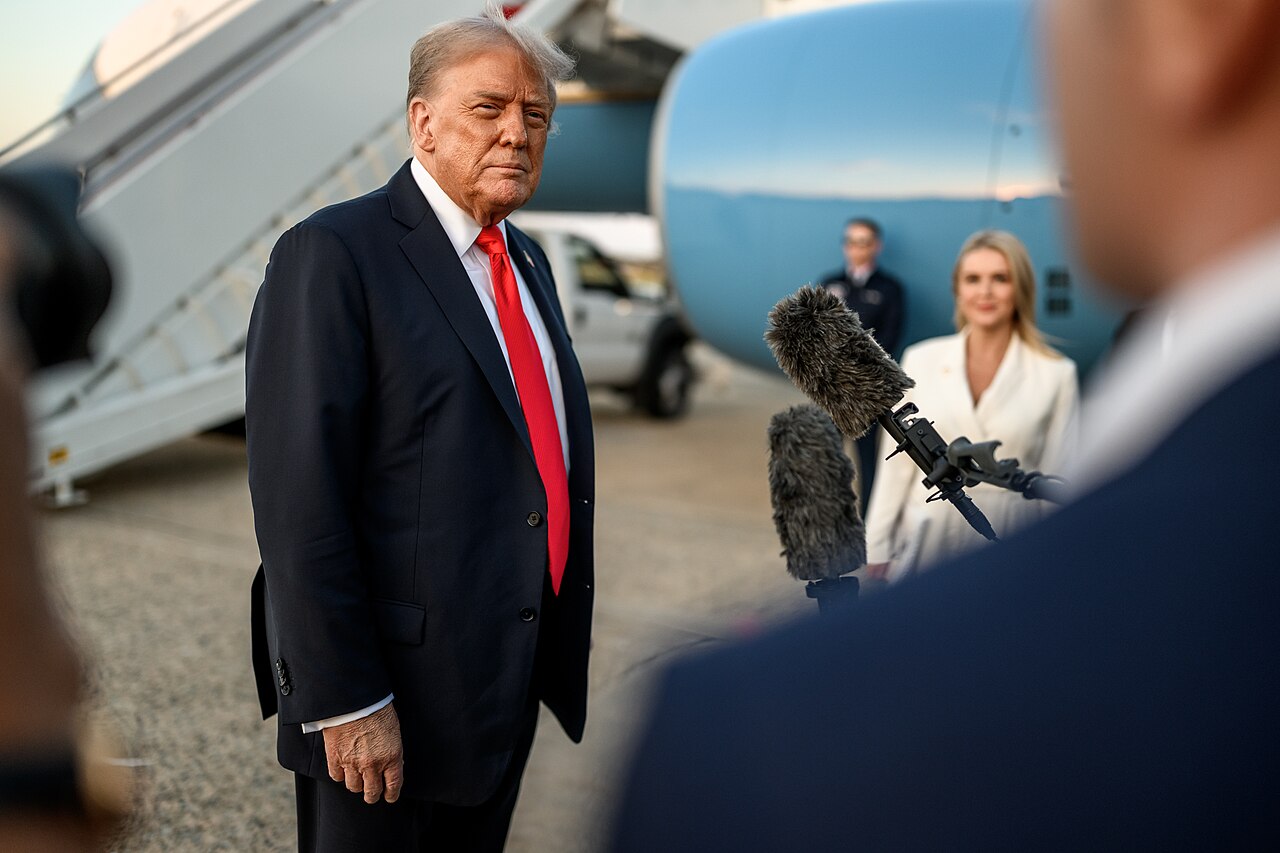
“I think the war is going to end immediately after the election,” Trump told reporters at Joint Base Andrews before traveling to the Republican midterm convention in Dallas, according to The Hill.
“They can’t hold out any longer,” Trump continued. “They’re desperate to try and affect the election so that we can get a nice, weak group of people in there, and leave them alone and let them have their nuclear weapon.”
The president did not provide evidence that Iranian leaders are intentionally extending the war to affect the midterms. His remarks nevertheless placed a remarkably specific political timeline on a conflict that has repeatedly shifted between military escalation, ceasefire efforts and stalled negotiations.
Trump Cools Talk Of Negotiations
Trump offered a cautious response when asked whether he expected negotiations between Washington and Tehran to resume.
“We’re not looking for it, to be honest,” the president said. “Originally, I wanted to make a deal. We’re so far down the line.”
“Yes, a negotiation could possibly happen, but it’s not something we’re looking at,” he added.
The comments represented a harder posture than the administration adopted during previous diplomatic efforts. An administration policy statement said the United States entered a ceasefire on April 7 and later signed a memorandum of understanding with Iran on June 17.
That agreement called for Iran to help ensure the safe passage of commercial vessels from the Persian Gulf into the Gulf of Oman. The administration said the arrangement began unraveling after Iran attacked neutral-flagged ships near the Strait of Hormuz in July, prompting the United States to resume strikes against Iranian military targets.
Trump has consistently maintained that any lasting agreement must prevent Iran from obtaining a nuclear weapon.
New Exchange Of Attacks Near Hormuz
The president’s prediction came during one of the sharpest escalations in the conflict in weeks.
Iran’s Islamic Revolutionary Guard Corps claimed Wednesday that it had attacked 10 vessels near the Strait of Hormuz, including two American ships and eight oil tankers. U.S. Central Command disputed Tehran’s account, saying the attempted attacks against American vessels failed, The Guardian reported.
The Iranian strikes followed an American operation against five Iranian crude-oil carriers.
CENTCOM said U.S. forces destroyed the five tankers Tuesday after the IRGC twice attempted to hit an American warship with ballistic missiles. The military said the warship avoided the attacks and no American personnel were injured.
American forces instructed the crews to abandon the tankers before striking four vessels in the Gulf of Oman and a fifth near Iran’s Kharg Island, according to CENTCOM. The military accused Iran of using the tankers as part of a shadow network that finances the IRGC and its regional proxies.
Trump said Wednesday that American forces had knocked out nine Iranian ships and suggested additional attacks were coming.
“I would say that the attacks are caused by us, and you’re going to see a lot more,” the president told reporters.
Conflict Collides With Midterm Campaign
The struggle over the Strait of Hormuz has also intensified economic pressure in the United States as the midterms approach.
Before the conflict, as much as 20 percent of the world’s oil and gas supplies traveled through the narrow waterway. The latest exchange of attacks helped push oil above $100 per barrel for the first time since July, raising fresh concerns about fuel prices and inflation.
Trump has argued that Tehran wants American voters to weaken his political position and elect lawmakers who would restrain the administration’s military campaign. Iranian officials have not indicated publicly that their strategy is tied to the U.S. election calendar.
For now, Trump appears prepared to keep applying military and economic pressure while leaving only a narrow opening for diplomacy.