President Donald Trump said Sunday he may delay a planned trip to China later this month as the United States seeks international support to reopen the Strait of Hormuz during the ongoing U.S.-Israeli war with Iran.
In a wide-ranging interview with the Financial Times, Trump suggested the trip—currently scheduled for March 31 through April 2—could be pushed back depending on whether China and other major powers agree to help secure the critical maritime passage after Iran closed it amid the conflict.
“We may delay,” Trump said of the trip, without offering further details.
The president is expected to meet Chinese President Xi Jinping in Beijing as part of the visit. The trip had been positioned as a key diplomatic moment between the world’s two largest economies, coming as U.S. and Chinese officials resume trade talks and seek to manage tensions over tariffs, technology restrictions and regional security issues.
Trump has recently called on major global powers to help patrol the Strait of Hormuz, a narrow waterway between the Persian Gulf and the Gulf of Oman that carries roughly one-fifth of the world’s oil supply. Iran moved to close the passage after hostilities escalated in late February, rattling energy markets worldwide.
Speaking to reporters aboard Air Force One on Sunday, Trump argued that China in particular has strong incentives to help reopen the strait because of its heavy reliance on Middle Eastern oil.
“China’s an interesting case study. They get most of their oil, as you know, by far, they get a lot, about 90 percent through the strait,” Trump said. “So I’ve said, ‘Would you like to come in?’ And we’ll find out. Maybe they will, maybe they won’t. You know, there’s some other deeper reasons where they may not.
“They should come in, in my opinion.”
Trump also urged several U.S. allies and partners to contribute naval support. In a post on Truth Social on Saturday, he said China, France, Japan, the United Kingdom and South Korea—among other nations affected by the disruption—should send ships to help police the strait.
The call has received a cautious response abroad. Germany’s defense minister said Monday that “this is not our war,” while other governments have avoided committing to any military involvement.
The closure of the Strait of Hormuz has had immediate economic consequences. Gas prices in the United States have climbed to more than $3.71 per gallon as of Monday, according to AAA—about 80 cents higher than a month ago—as energy markets react to the disruption in global oil shipments.
China’s role in the crisis has drawn particular attention. According to the U.S. Energy Information Administration, more than one-third of the oil transported through the Strait of Hormuz in the first quarter of 2025 was destined for China. Since the war began Feb. 28, Iran has sent at least 11.7 million barrels of crude oil to China, according to CNBC—more than double Beijing’s typical daily intake through the strait during the same period last year.
Meanwhile, U.S. and Chinese officials began a new round of economic talks in Paris on Sunday. Treasury Secretary Scott Bessent is leading the American delegation, meeting with Chinese Vice Premier He Lifeng in discussions aimed at stabilizing trade relations.
Bessent acknowledged Monday that Trump’s visit to Beijing could potentially be rescheduled, but he rejected suggestions that any delay would be tied to pressure on China to patrol the Strait of Hormuz.
“If the meetings are delayed, it wouldn’t be delayed because the president demanded that China police the Strait of Hormuz,” Bessent said during an interview on CNBC’s Squawk Box. “If the meeting, for some reason, is rescheduled, it would be rescheduled because of logistics.”
He added that the president may also decide to remain in the United States while the war continues.
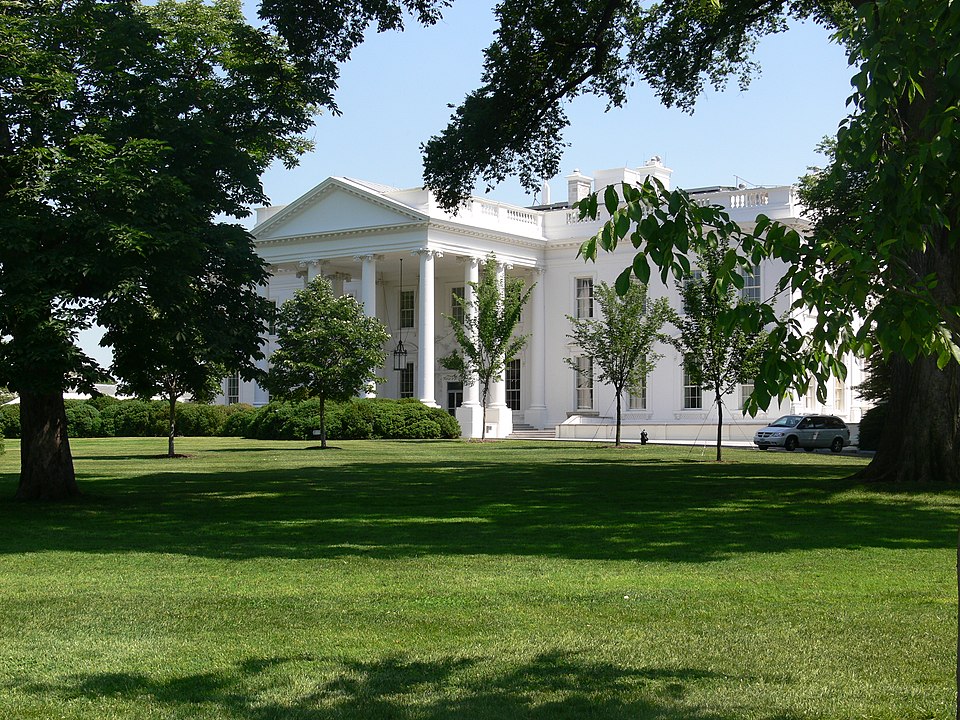
“It would be a decision the president made as commander in chief to stay in the White House or to stay in the United States while this war is being prosecuted,” Bessent said.
Trump’s planned trip to Beijing would mark one of the most significant face-to-face meetings between the two leaders in recent months and comes as Washington and Beijing attempt to balance economic cooperation with growing geopolitical tensions. Whether the visit proceeds as scheduled may now depend in part on developments in the Middle East and the international response to the crisis in the Strait of Hormuz.