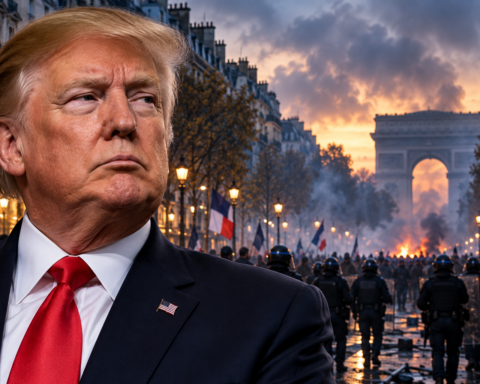
President Trump is set to host a high-stakes diplomatic breakthrough today in Washington, D.C., as Israel and Lebanon prepare for what could become a historic round of peace talks — notably without French involvement.
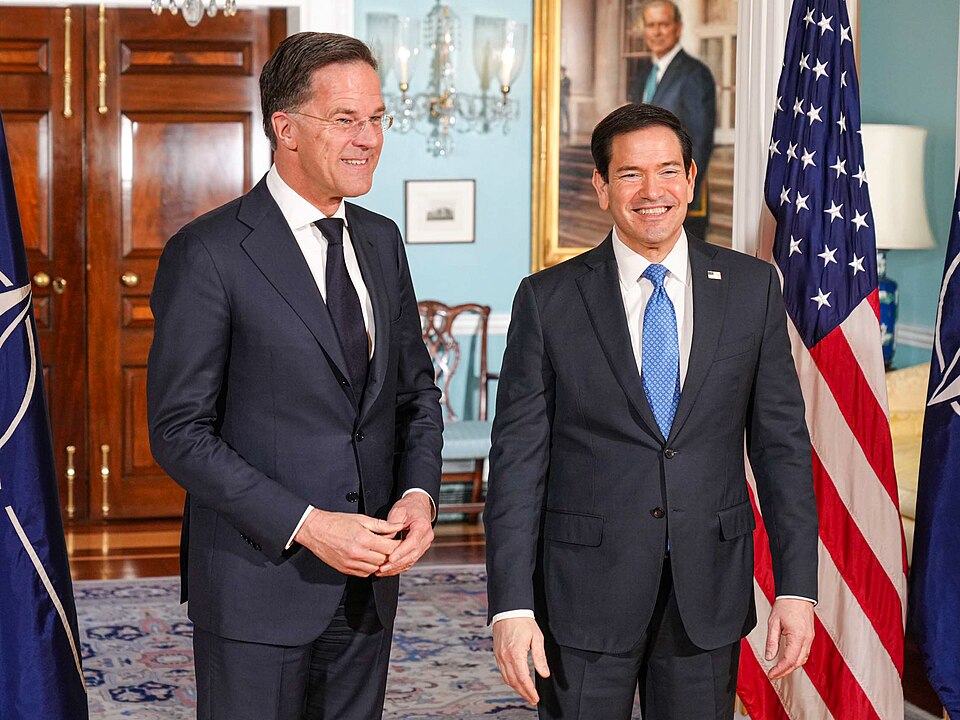
The meeting, expected to take place at the ambassadorial level and hosted by Secretary of State Marco Rubio, marks a significant shift in regional diplomacy. Lebanon, once under French mandate, will engage directly with Israel under U.S. leadership, signaling a potential realignment in how negotiations in the region are conducted.
According to The Jerusalem Post, Israel specifically requested that France be excluded from the talks. An Israeli official cited “France’s conduct over the past year – including initiatives aimed at limiting Israel’s ability to fight in Iran, and a complete lack of willingness to take concrete steps to help Lebanon disarm Hezbollah – [which] has led Israel to view France as an unfair mediator.”
Tensions surrounding the talks escalated further on Monday when Hezbollah leader Naim Qassem publicly called on the Lebanese government to cancel the meeting altogether. In a televised address, Qassem dismissed the negotiations as pointless and declared that the group would continue confronting Israeli military actions.
The backdrop to today’s talks is a widening regional conflict. Hezbollah entered the war earlier this year, launching rockets into Israel following a joint U.S.-Israel strike on Iran. Despite this escalation, French President Emmanuel Macron has continued to push for Israel to halt strikes against Hezbollah infrastructure in Lebanon — a position that has drawn sharp criticism from Israeli officials.
Israeli Brig. Gen. (Res.) Yosef Kuperwasser described Macron’s approach as “working against the best interests of the Lebanese state and government. This is a very problematic direction.” He further accused the French president of “taking the side of Hezbollah and normalizing Hezbollah because he is focused on ‘narrow interests.’”
Kuperwasser emphasized that both Israel and the United States are aligned in their expectations for Lebanon: “We want to see Lebanon do something about Hezbollah, something real, not just issue statements and pledges.” He added that Israel believes its recent military actions have weakened Hezbollah significantly and created an opportunity for meaningful change — but only if Lebanon moves to “disarm Hezbollah.”
France’s position remains more cautious. While French officials have voiced support for including Lebanon in a broader ceasefire framework, they have also prioritized ending Israeli military operations in Lebanese territory. A French diplomat told The Times of Israel, “what we are hoping for is not a ticket to the meeting, but that Israel stops its offensive on Lebanon.”
The divide reflects a broader disagreement over how to handle Hezbollah. Unlike the United States and several other Western nations, France distinguishes between Hezbollah’s “military wing” and “political wing,” designating only the former as a terrorist organization. Critics argue this effectively legitimizes the group, which itself maintains that it operates as a unified entity.
French lawmaker François-Xavier Bellamy recently urged a shift in policy, stating, “France must stop normalizing Hezbollah.” Meanwhile, Israeli analyst Edy Cohen argued that France’s posture is driven by its desire to maintain influence in Lebanon, saying, “France is forced not to come out against Hezbollah in order to legitimize its involvement in Lebanon.”
Despite these tensions, French officials have reiterated support for direct talks between Israel and Lebanon. Foreign Ministry spokesman Pascal Confavreux stated, “Iran has to stop terrorizing Israel through Hezbollah because Hezbollah chose to bring Lebanon into a war which is not Lebanon’s war… Lebanon has to be included in the ceasefire, something that we are pushing diplomatically.”
As the talks begin today, the stakes are high. A breakthrough could reshape the balance of power in Lebanon, curb Hezbollah’s influence, and mark a major diplomatic win for the Trump administration. But with Hezbollah openly opposing the negotiations and divisions among Western allies, the path forward remains uncertain.