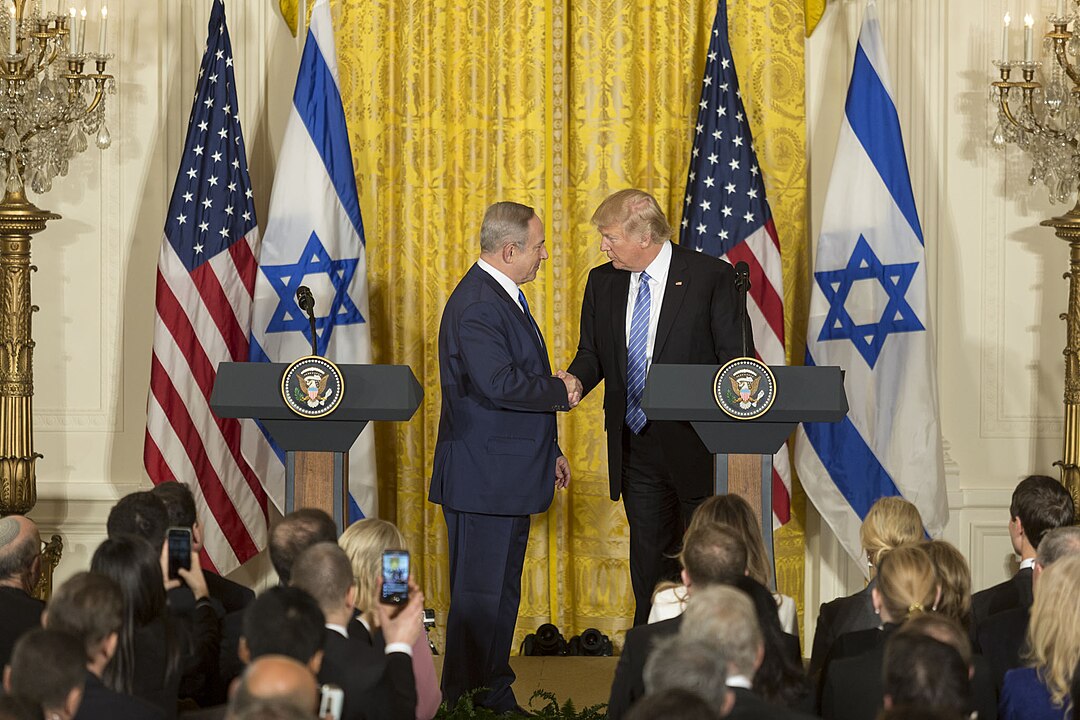
Israeli Prime Minister Benjamin Netanyahu is arriving in Washington on Tuesday after requesting that a previously scheduled February 18 meeting with President Trump be moved forward, following public comments by the president about progress in U.S. talks with Iran.
Trump said last week that U.S. envoys had held “very good talks” with Tehran and that a follow-up meeting was expected soon. Iranian officials have stated that discussions are limited strictly to nuclear issues.
Israeli officials, however, have made clear that Jerusalem is pushing for a broader framework. Netanyahu’s government wants any agreement with Iran to address not only its nuclear program, but also its ballistic missile development and its support for militant proxy groups across the Middle East.
Before departing Israel, Netanyahu said he would present President Trump with Israel’s principles for negotiations, emphasizing that the stakes extend beyond Israel. “This is important not only for Israel, but for every country that wants peace and security,” he said.
Netanyahu’s office reiterated over the weekend that Israel believes negotiations must include limits on Iran’s missile capabilities and an end to Tehran’s support for groups such as Hezbollah and Hamas.
The accelerated meeting highlights the close coordination between Trump and Netanyahu. Last June, the U.S. conducted airstrikes on Iranian nuclear enrichment facilities, a move that Israeli officials publicly welcomed as a decisive demonstration of American resolve. Recent satellite imagery suggests Iran has since taken defensive measures at key sites, including burying entrances at its major underground facility near Isfahan.
The U.S. has maintained a significant military presence in the region, including naval assets positioned within striking distance of Iran. While Trump has signaled openness to diplomacy, administration officials have also emphasized that military options remain available if negotiations fail.
Trump has repeatedly warned Iran’s leadership against escalating repression or regional aggression, while also stating that he prefers a deal that permanently prevents Iran from acquiring a nuclear weapon.
For Israel, the concern is that a narrow agreement focused solely on nuclear enrichment could leave Iran free to expand its missile arsenal and regional influence — capabilities Israeli officials view as equally destabilizing.
Tuesday’s meeting is expected to focus on aligning U.S. and Israeli positions as talks with Iran continue, with Netanyahu seeking firm assurances that any deal reflects what Israel considers its core security requirements.