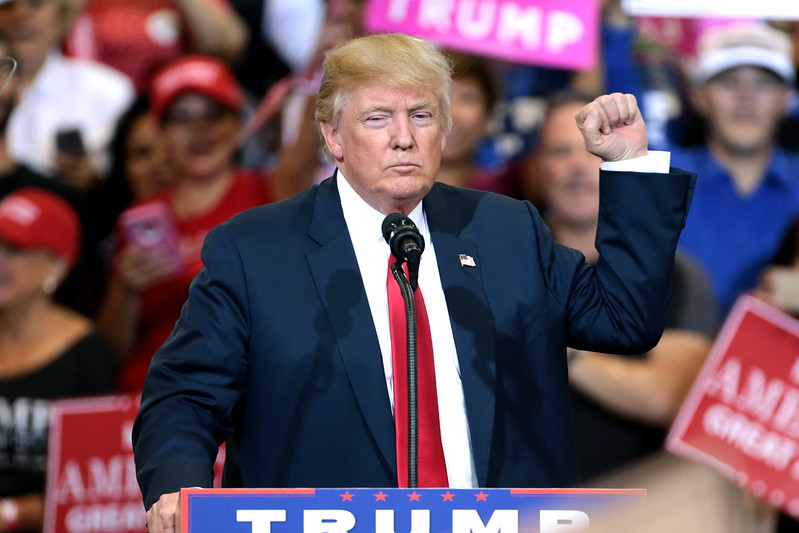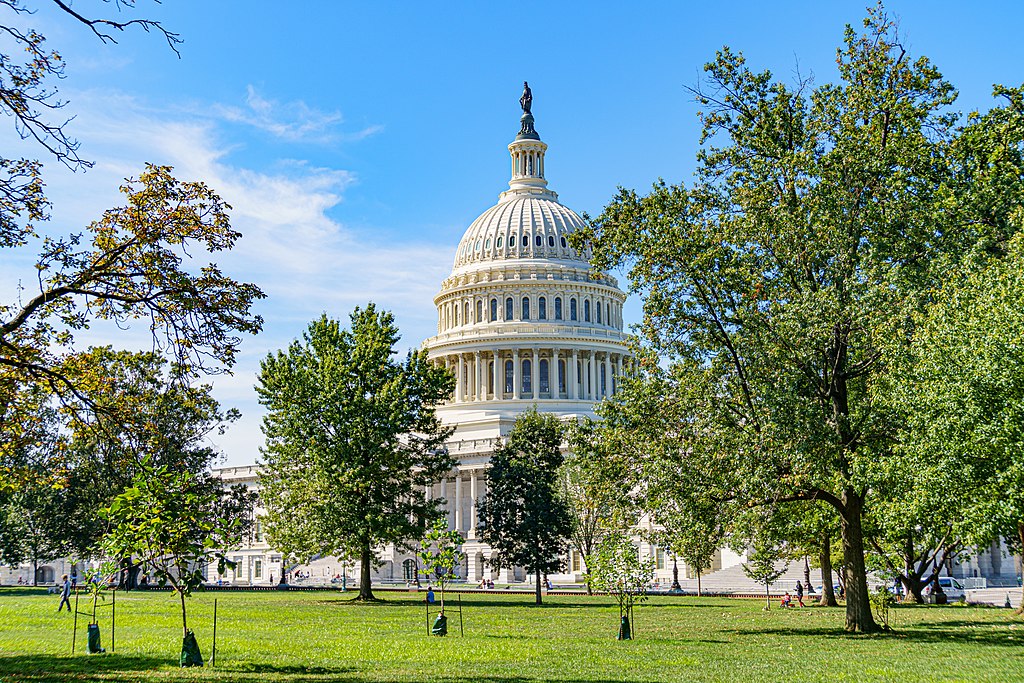
President Donald Trump returns to Capitol Hill on Wednesday for a high-stakes meeting with Senate Republicans, arriving at a moment of growing tension within the GOP and increasing concern about the party’s prospects heading into the 2026 midterm elections.
The closed-door luncheon marks Trump’s first meeting with the Senate Republican conference in more than a year. During that time, the relationship between the president and GOP lawmakers has become increasingly complicated, with disagreements emerging over legislative priorities, foreign policy, and the party’s political strategy.
At the center of Wednesday’s discussion is the SAVE America Act, a voter identification and proof-of-citizenship proposal that Trump has elevated to the top of his legislative agenda. The president has repeatedly urged Republicans to pass the measure, arguing it is essential for election integrity and Republican electoral success.
“We have to pass the SAVE America Act,” Trump told reporters Tuesday. “It’s voter ID, proof of citizenship, etc. We have to pass it.”
On Wednesday, President Trump announced he is canceling a planned signing of a widely supported bipartisan housing bill until the SAVE Act is passed.
House lawmakers passed the Housing Act by a 358–32 vote on Tuesday. The bill seeks to expand the supply of homes and will lower costs while also giving individual buyers a leg up by banning large institutional investors from purchasing single-family homes.
The problem for Senate Republicans is that the legislation lacks the votes needed to overcome the Senate’s 60-vote threshold. Senate Majority Leader John Thune has repeatedly acknowledged the math challenge facing Republicans, creating a growing divide between Trump’s demands and the political realities confronting GOP leadership.
That disconnect has become a source of frustration for many Senate Republicans.
“If we’re going to win the midterm elections, we need to get on the same page,” Sen. John Cornyn (R-Texas) said ahead of the meeting. “We’re not on the same page now, and that I think is dangerous.”
Cornyn’s comments reflect broader concerns within the conference as Republicans attempt to maintain control of Congress while navigating internal disputes over strategy and priorities.
Trump’s influence over the Senate GOP remains significant, but it has also generated friction. The president backed successful primary challenges against both Cornyn and Sen. Bill Cassidy (R-La.) two lawmakers who had frequently supported his agenda. Their defeats have further altered the dynamics within the conference and contributed to questions about party unity.
The SAVE America Act is not the only issue looming over Wednesday’s meeting. Republicans are also grappling with questions surrounding a proposed memorandum of understanding with Iran, the future of Section 702 of the Foreign Intelligence Surveillance Act (FISA), and broader concerns about national security policy. Several lawmakers have indicated Congress should have a formal role in reviewing any future agreement reached between the Trump administration and Iran.
Meanwhile, Trump’s insistence on prioritizing the SAVE America Act has increasingly complicated the Senate’s broader legislative agenda. Republican leaders have struggled to advance other priorities while pressure mounts from conservative senators who want leadership to devote more floor time and procedural efforts to the voting bill.
Adding to the pressure, Trump on Wednesday abruptly canceled a planned signing ceremony for a bipartisan housing package that recently passed Congress, saying he wanted lawmakers to focus on passing the SAVE America Act first. The move underscored just how central the legislation has become to the president’s political agenda.
The meeting also comes as Republicans face new divisions over Trump’s handling of foreign policy, particularly following recent Senate action aimed at limiting the administration’s authority regarding military operations involving Iran. Several Republican senators joined Democrats in supporting a symbolic war powers resolution, highlighting ongoing disagreements within the party.
Despite the tensions, many Senate Republicans hope Wednesday’s meeting can help restore some sense of unity before the midterm campaign enters full swing.
North Carolina Sen. Thom Tillis described his hope for a “conciliatory” discussion, suggesting many of the disagreements have already been communicated privately to the White House.