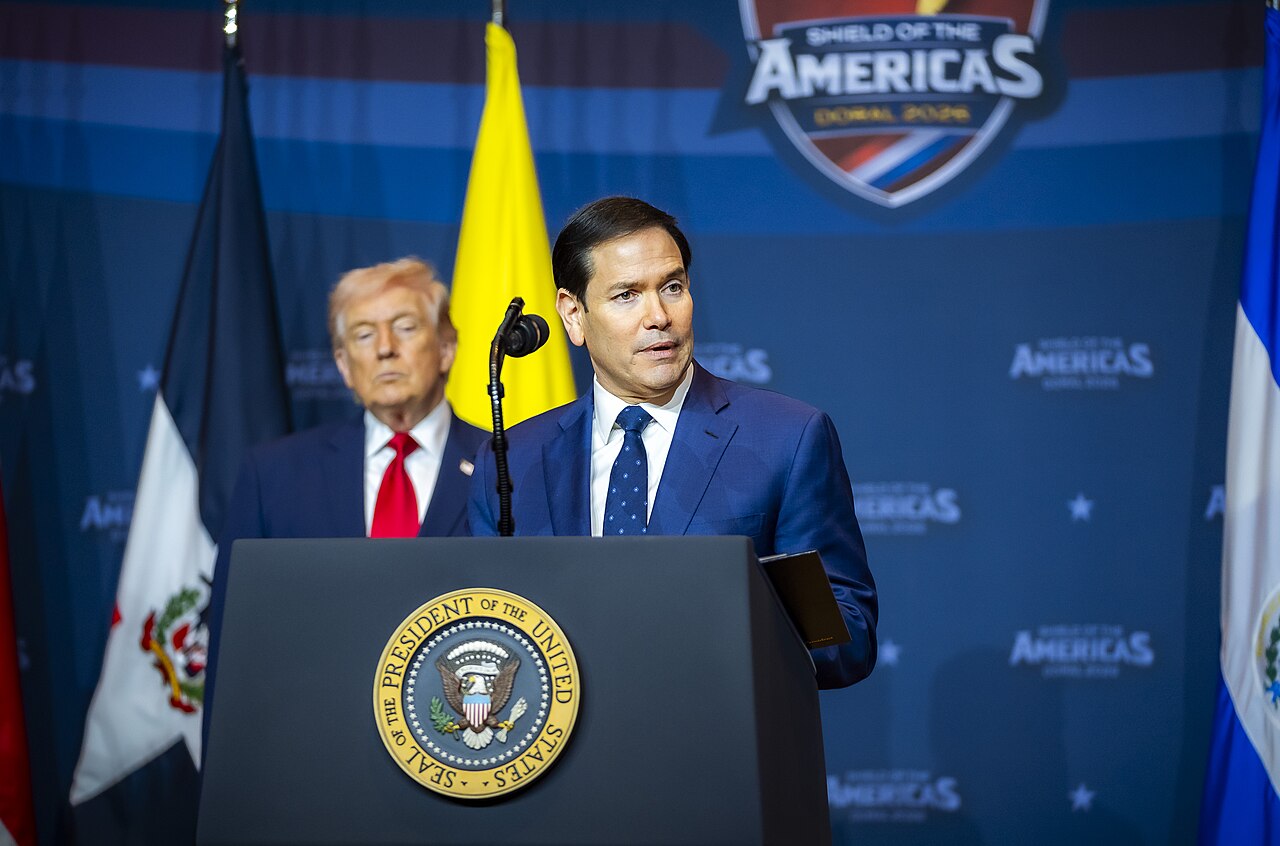
Secretary of State Marco Rubio will travel to the Middle East this week as the Trump administration works to advance negotiations with Iran following last week’s memorandum of understanding.
Rubio is scheduled to visit the United Arab Emirates, Kuwait and Bahrain, where he will also meet with foreign ministers from the Gulf Cooperation Council (GCC), according to a State Department announcement Monday.
The trip comes as Vice President JD Vance continues efforts to negotiate a more comprehensive agreement with Tehran after U.S. and Iranian officials signed a memorandum of understanding (MOU) on June 17 that established a 60-day framework for further talks.
State Department spokesman Thomas Pigott said Rubio’s meetings will focus on regional security and implementation of the agreement.
“The Secretary will discuss a range of priorities including the memorandum of understanding with Iran, efforts to secure full and free safe transit through the Strait of Hormuz, and the importance of safety in the region,” Pigott said.=
Vance said over the weekend that the initial negotiations had established a “good foundation” for reaching a permanent agreement to end the war, though significant issues remain unresolved. U.S. and Iranian negotiating teams are expected to continue technical discussions during the 60-day window established by the MOU.
The agreement ended active hostilities between the United States and Iran and reopened the Strait of Hormuz, one of the world’s most important shipping lanes. The waterway had been effectively closed after the conflict began in February, disrupting global energy markets and commercial shipping.
However, several Gulf states have reportedly expressed concerns about portions of the agreement.
Regional officials have also raised questions about future safeguards against Iran’s missile and drone programs, which remain a major security concern for Gulf nations.
The memorandum calls for “the immediate and permanent termination of military operations on all fronts, including in Lebanon,” but questions remain about how that language will be implemented.
U.S. officials have said the agreement does not require an Israeli withdrawal from Lebanon. Meanwhile, Lebanon’s National News Agency reported Israeli strikes against multiple targets on June 20, days after the agreement was signed. Israeli officials said the operations were conducted in response to attacks from Hezbollah.
Rubio’s visit is expected to focus heavily on reassuring Gulf partners that the administration remains committed to regional security even as it pursues diplomacy with Tehran.
The GCC consists of Saudi Arabia, the United Arab Emirates, Bahrain, Qatar, Kuwait and Oman. Several of those countries played supporting roles in facilitating communication between Washington and Tehran during recent negotiations.
The memorandum gives both sides until mid-August to negotiate a more comprehensive accord addressing Iran’s nuclear program, sanctions relief, regional security concerns and long-term guarantees for freedom of navigation through the Strait of Hormuz.