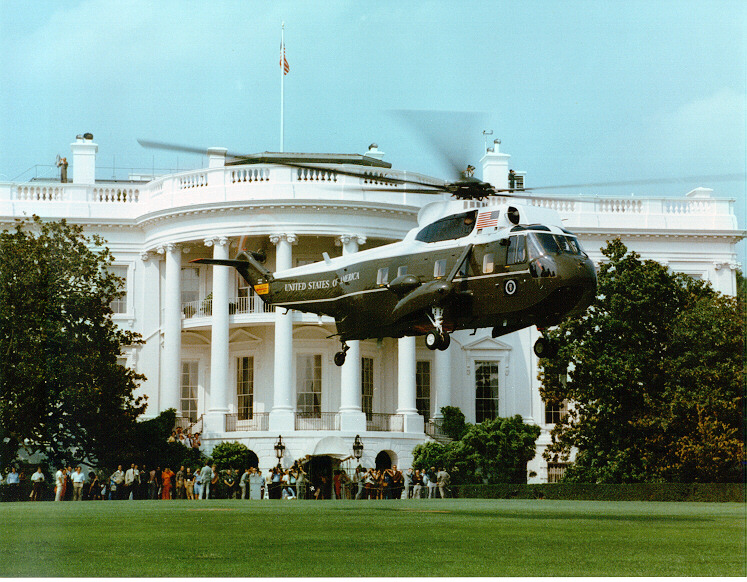
The Federal Aviation Administration is investigating an air traffic safety incident involving Marine One while President Donald Trump was aboard, after commercial flights at Ronald Reagan Washington National Airport were reportedly not halted before the presidential helicopter departed Tuesday afternoon.
The Wall Street Journal first reported that Marine One left the White House as commercial traffic continued operating at the nearby airport. Federal aviation officials are reviewing whether the episode resulted in a “loss of standard separation,” the term used when aircraft come closer than air traffic control rules permit.
The separation requirements cited for this incident called for at least 1.5 miles of horizontal distance and 500 feet of vertical distance between the aircraft.
However, an FAA spokeswoman told the Journal that Marine One and the departing passenger jet did not appear to have come dangerously close and were not converging. Officials therefore did not characterize the incident as a serious near-collision.
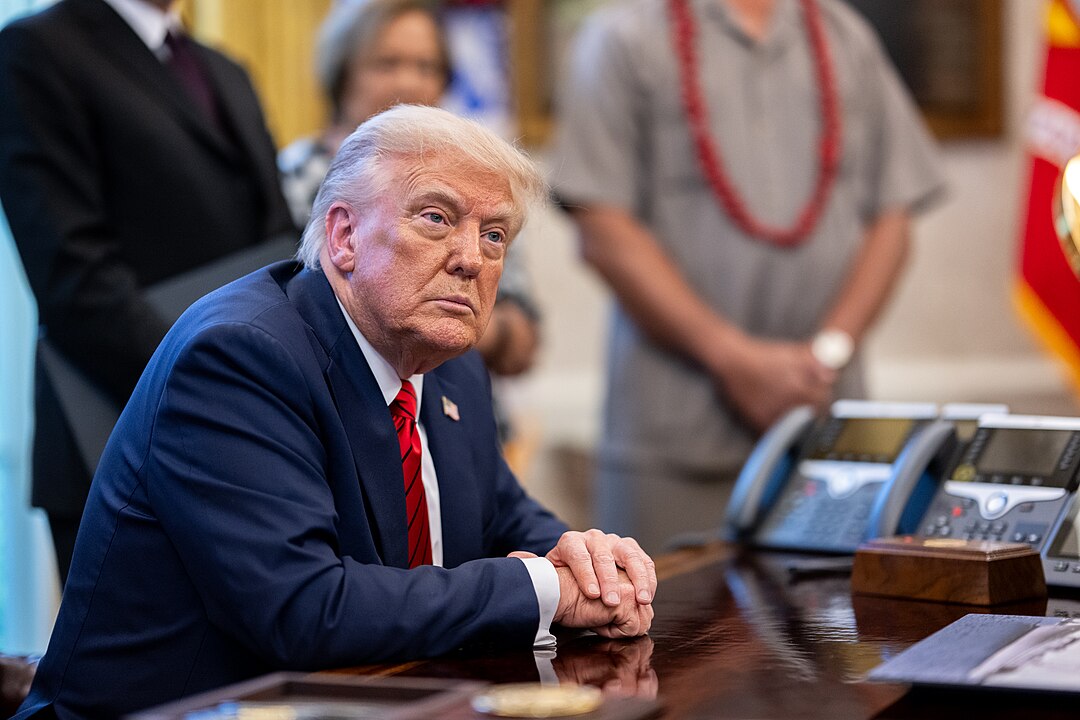
The White House also emphasized that Trump was never in danger.
“Marine One flights are piloted by some of the best aviators in the world, and at no point was the President in harm’s way,” White House Senior Deputy Press Secretary Kush Desai told 7News.
Air traffic control recordings provide additional details about the moments surrounding the departure. Around 2:30 p.m., the Marine One crew advised the Reagan tower that the helicopter expected to lift off in three minutes, according to audio reviewed by the Journal and 7News.
A short time later, the crew reported it was “proceeding as briefed.” A controller then alerted Marine One to an Embraer E-170 passenger jet departing Runway 1 at Reagan National. The helicopter’s crew responded that it had the aircraft in sight, briefly delayed its movement and then continued along its planned route.
Marine One completed the trip to Joint Base Andrews safely before Trump continued to California. The commercial aircraft also continued without incident.
The FAA is examining communications between the helicopter crew and controllers at Reagan National to determine why commercial traffic had not been paused and whether the required coordination procedures were followed.
The episode carries additional significance because of the deadly Jan. 29, 2025, collision near the airport. An American Airlines regional jet operated by PSA Airlines and a U.S. Army Black Hawk helicopter collided over the Potomac River, killing all 67 people aboard the two aircraft.
Following that disaster, the FAA imposed restrictions on helicopter operations around Reagan National and limited simultaneous helicopter and fixed-wing traffic in designated airspace. The agency later suspended the use of visual separation between helicopters and airplanes near busy airports, requiring controllers to maintain defined radar-based lateral or vertical distances instead.
The National Transportation Safety Board concluded in January that systemic failures in airspace design, safety oversight and risk management by the FAA and Army contributed to the 2025 crash. Investigators also cited the air traffic system’s overreliance on visual separation and the tower team’s loss of situational awareness under a high workload.
Those findings are likely to intensify scrutiny of Tuesday’s incident, even though both the FAA and White House agree that Trump was not in danger.
The investigation remains ongoing, and the agency has not announced any findings or disciplinary action.