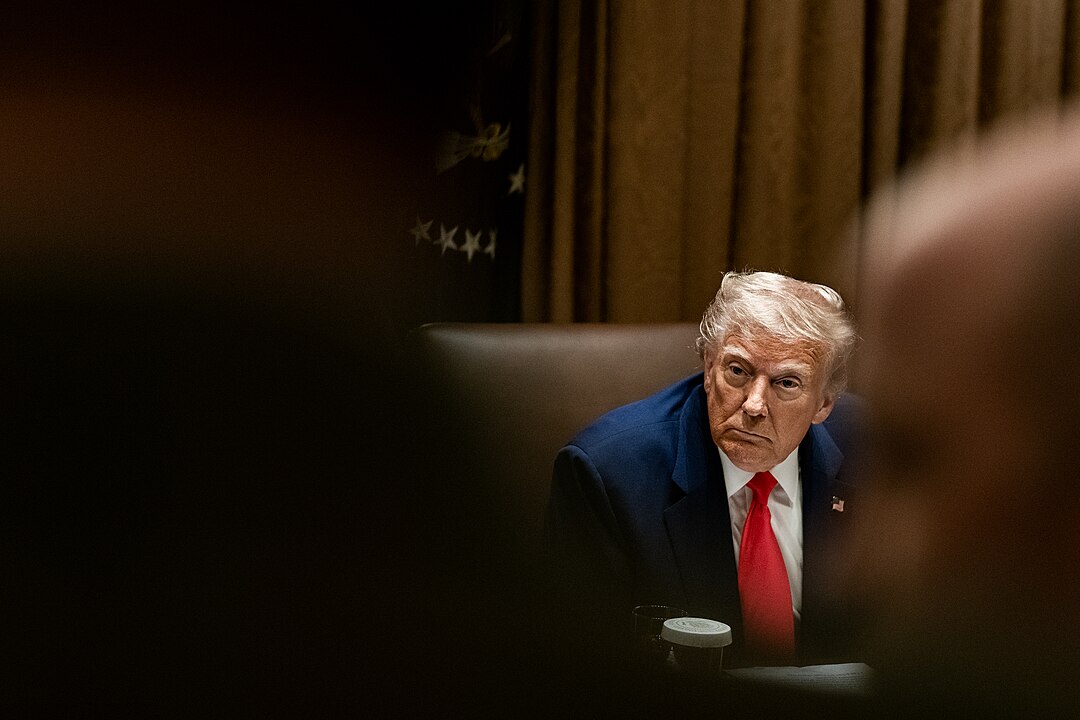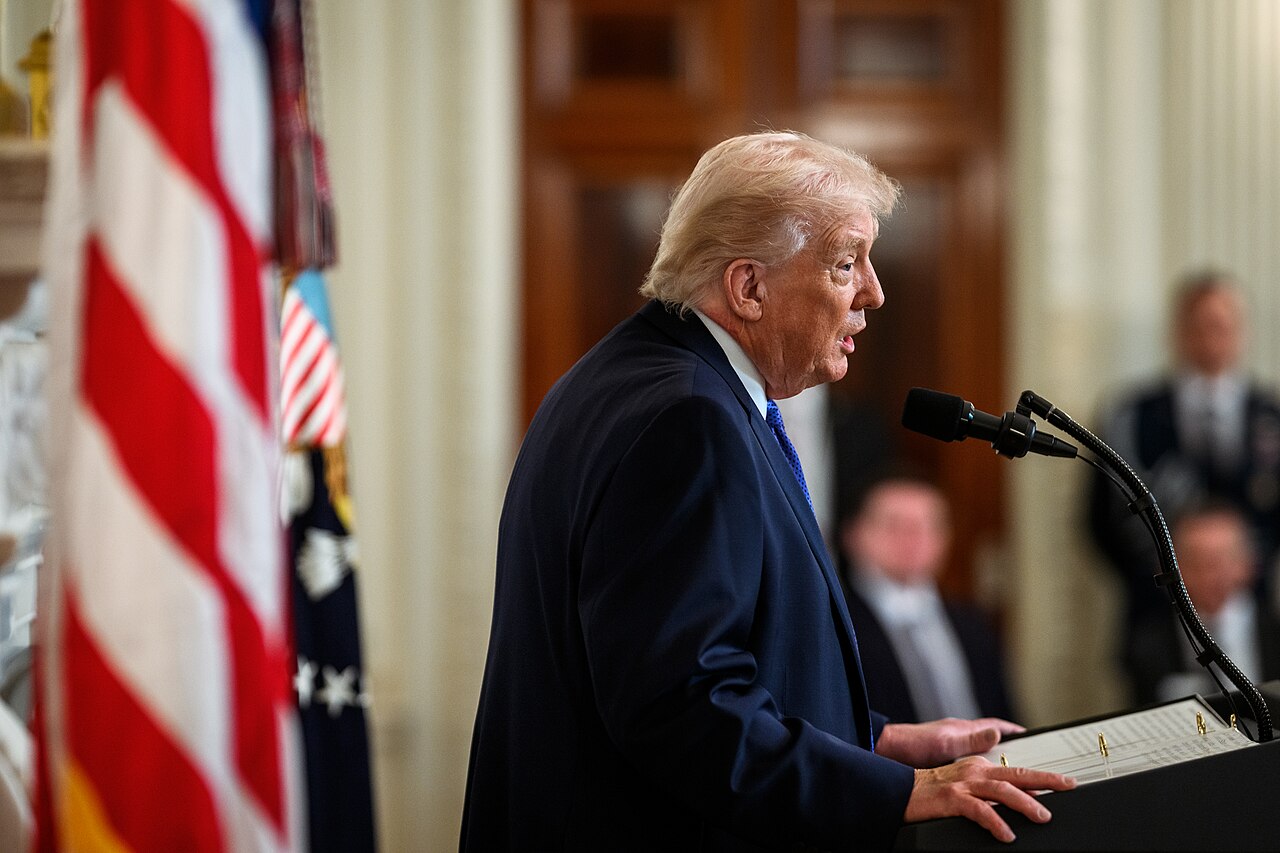
President Donald Trump formally kicked off a new initiative Thursday designed to connect military veterans with trucking careers while cutting red tape that can delay their transition into the civilian workforce.
Dubbed “Freedom Haulers,” the White House-led campaign brings together the departments of Transportation, Veterans Affairs, Labor and War to help former service members secure commercial driver’s licenses and find jobs with trucking companies.
Trump appeared alongside Transportation Secretary Sean Duffy, Veterans Affairs Secretary Doug Collins, acting Labor Secretary Keith Sonderling and veterans for the White House announcement.
One of the initiative’s most significant changes doubles the amount of time veterans have to take advantage of an expedited licensing program.
Veterans with experience operating heavy military vehicles will now have up to two years after leaving the service—rather than one—to apply for a commercial driver’s license without retaking a driving examination.
More than 40,000 service members and veterans have already used the Military Skills Test Waiver Program, according to the Federal Motor Carrier Safety Administration.
The administration also announced that Alabama, Arkansas, Florida, Indiana, Louisiana, Maryland and Wyoming will join the agency’s Even Exchange Program. The additions bring the number of participating or committed states to 34.
The Even Exchange Program allows qualified military drivers to bypass both the written and driving examinations normally required to receive a civilian CDL.
Active-duty service members will also be permitted to apply and test for a commercial learner’s permit or CDL in the state where they are stationed instead of returning to their home state. That flexibility will remain available for two years after they leave the service.
For veterans without military heavy-vehicle experience, the initiative will promote other federal training options. GI Bill benefits can cover up to 100 percent of CDL tuition at approved schools, while the Veterans Readiness and Employment program can pay for training and assist veterans with service-connected disabilities in finding jobs.
Transitioning service members may also use the military’s SkillBridge program to spend their final 180 days on active duty receiving civilian trucking training. Department of Labor apprenticeship programs can provide eligible veterans with a monthly housing allowance in addition to the wages they earn while training.
“Illegal immigrants who can’t speak our language have no business getting behind the wheel of a big rig,” Duffy said in a statement released by the Transportation Department. “Veterans—who have already demonstrated the grit, discipline, and skills to take on this vital task—are the right people for the job.”
Duffy also promoted the initiative on X with the message, “ILLEGALS OUT, VETERANS IN,” according to The Hill.
The campaign comes as the Trump administration steps up enforcement of commercial-driving requirements. Trump signed an executive order in April 2025 directing federal officials to enforce an existing requirement that commercial drivers be sufficiently proficient in English to read road signs, answer official questions and complete reports.
Under the administration’s policy, drivers who fail English-proficiency checks may be placed out of service. Federal officials have also reviewed state-issued licenses for irregularities and tightened verification of domestic and foreign driving credentials.
The Freedom Haulers campaign will use digital and radio advertisements as well as a new website connecting veterans with federal resources and participating employers.
Werner Enterprises provided the initiative with an early private-sector commitment, announcing plans to hire 1,400 veterans and military spouses in 2027. According to the Transportation Department, the pledge would increase the company’s veteran workforce by 67 percent.
“President Trump’s Freedom Haulers initiative is another victory for common sense,” Collins said. “VA already helps thousands of Veterans make this transition every year, and we stand ready to help thousands more.”
The administration argues that military experience—particularly the discipline, technical knowledge and independence demanded of service members—makes veterans especially well-suited for careers responsible for moving the goods that keep American businesses operating and store shelves stocked.