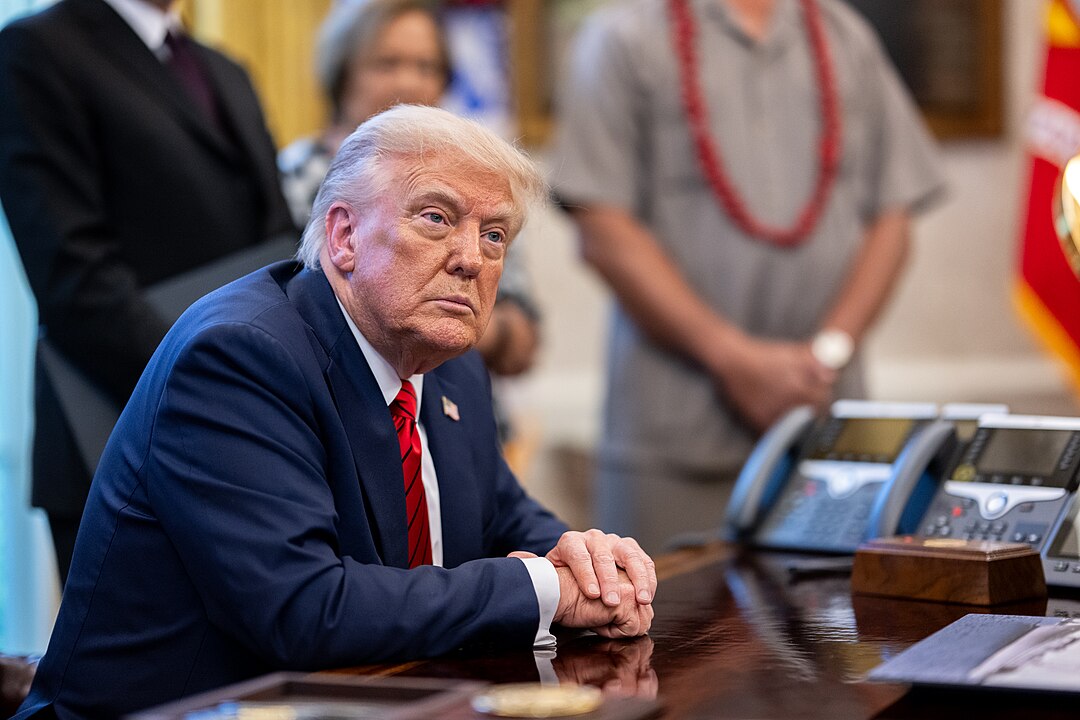
President Donald Trump signed a sweeping executive order Monday that seeks to give American families more control over childhood vaccination decisions while reshaping the federal government’s approach to vaccine recommendations, research and school-entry requirements.
The order, titled “Delivering Gold Standard Childhood Vaccine Recommendations for Americans,” establishes a core recommendation covering 11 diseases, down from the 18 diseases included in federal guidance in 2024.
Trump called the action a “major victory for parents’ rights, religious and constitutional rights, and for gold-standard science.”
The administration says the changes will bring the United States closer to other developed countries while allowing parents and doctors to make more individualized decisions for children.
“Parents can still choose to give their children all of the vaccinations if they wish. It’s up to the parents,” Trump said during the Oval Office announcement, according to Fox News. “We’re making recommendations that are strong — but it’s up to the parents if they wish, and they will be covered by insurance.”
A smaller core schedule—with additional options preserved
Under Trump’s order, immunizations against 11 diseases remain recommended for all children: measles, mumps, rubella, diphtheria, tetanus, pertussis, polio, Haemophilus influenzae type B, pneumococcal disease, human papillomavirus and varicella, commonly known as chickenpox.
Other immunizations—including those for hepatitis A, hepatitis B, rotavirus, meningococcal disease, influenza and COVID-19—would generally be recommended for certain high-risk populations or considered through shared clinical decision-making between parents and health care providers.
That distinction is important: The administration is not seeking to make the other vaccines unavailable. Its policy is to move them out of the universal category while preserving parents’ ability to request them.
The administration’s January 2026 HHS assessment recommends that the vaccines remain available without cost-sharing through private insurance, Medicaid, the Children’s Health Insurance Program and the Vaccines for Children Program.
For families, the administration says that approach offers several potential benefits: fewer blanket federal recommendations, more personalized discussions with doctors, continued access to additional vaccines and greater consideration of a child’s health conditions, exposure risks and family circumstances.
The blanket recommendation that every child receive a COVID-19 vaccine has also ended. Families may still choose the shot following a discussion with a clinician.
More control over timing and combination shots
Trump’s order calls for giving parents additional options regarding when and how their children receive vaccines.
It recommends administering childhood immunizations during separate medical visits “to the maximum extent feasible.” It also directs the Department of Health and Human Services to develop a plan for offering separate measles, mumps and rubella shots once single-disease products become available domestically.
The combined MMR vaccine will remain available under the order.
“I think you’re going to see some amazing results by breaking it up,” Trump said, according to Fox News. “It’s not just that you’re doing fewer vaccines or jabs, as they say, but you’re doing them in a series of visits to the doctor. Much smaller amounts.”
The administration argues that offering both combined and single-disease products would allow parents to decide which approach works best for their children instead of being limited to one federally preferred option.
Separate measles, mumps and rubella vaccines are not currently licensed for use in the United States, meaning that portion of the policy cannot take effect immediately. HHS has 90 days to present the president with plans for expanding those options.
Medical organizations have disputed the need to separate or delay vaccines. The American Academy of Pediatrics maintains that the existing schedule is safe and effective, while critics warn that additional appointments could leave children unprotected for longer and create new scheduling burdens for working families. The order does not claim to resolve that debate immediately; it directs HHS to conduct further research into timing, sequencing, combination products and alternative vaccine ingredients.
Aligning America with peer nations
Trump ordered the review after questioning why the United States recommends substantially more childhood vaccine doses than other developed countries.
The HHS assessment found that the American schedule in 2024 recommended immunization against 17 diseases, plus an RSV monoclonal antibody for some infants, for a total of 18. Depending on the products used, that schedule involved between 84 and 88 vaccine doses and as many as 72 administrations.
By comparison, Denmark’s childhood schedule provided protection against 10 diseases through 30 doses and 11 injections, according to the assessment.
The report concluded that the United States recommended more childhood vaccines than any of the 20 peer countries it examined—and more than twice as many doses as some European nations. It also found that many peer countries rely more heavily on public education and voluntary cooperation than school-entry mandates.
The Trump administration believes aligning the core schedule with international consensus could rebuild public trust without preventing families from selecting additional protection.
Defending religious and medical exemptions
The order also directs the attorney general to support “meritorious legal actions” challenging state laws that may conflict with federal protections involving parental authority, religious freedom, disability accommodations and equal protection.
The Justice, Education and Health and Human Services departments must also review whether government contractors and grant recipients are complying with applicable religious and medical-exemption requirements.
That could benefit families who believe their legitimate religious beliefs, medical conditions or disability-related needs have not been properly considered.
However, the order does not immediately repeal state vaccination requirements. States and local governments—not the federal government—establish school-entry mandates. Trump’s order advises them to review their laws and authorizes federal officials to pursue legal challenges where the administration believes constitutional or statutory protections have been violated.
A broader MAHA effort
The vaccine order is the latest component of Trump’s Make America Healthy Again agenda.
Trump established the MAHA Commission in February 2025 and directed it to investigate the causes of rising childhood chronic disease. The administration later released a strategy containing more than 120 initiatives, including a commitment to review the federal childhood vaccine framework.
The new order instructs HHS to strengthen safety monitoring, improve transparency, study the timing and cumulative effects of childhood immunizations, investigate alternatives to aluminum-based adjuvants and continuously evaluate vaccine risks and benefits using American and international data.
For parents, the immediate message from the White House is straightforward: The administration wants federal policy to provide guidance without eliminating family choice. Core vaccines will remain recommended, additional vaccines are intended to remain accessible, and parents will have a larger role in deciding the timing and scope of their children’s immunizations in consultation with their doctors.
“This updated recommendation finally aligns the United States with other advanced and developed nations around the world,” Trump said. “More importantly, it aligns us with common sense and knowledge.”