President Donald Trump escalated the legal fight over his White House ballroom on Friday, asking the Supreme Court to allow construction to continue before a lower-court injunction takes effect.
In an emergency application, Solicitor General D. John Sauer asked the justices to immediately pause the injunction while the administration prepares a full appeal. The order is scheduled to take effect Aug. 21.
“This Project, like its predecessors, should be a matter for the President and the political process, not construction-by-injunction,” Sauer wrote.
The filing argues that the $400 million, 90,000-square-foot ballroom is one component of a broader East Wing security complex designed to protect the president, senior officials and foreign dignitaries. It describes hardened construction, medical facilities, bomb shelters, secure communications systems, a drone-resistant roof and a rooftop drone port.
The administration says the project is now 65% complete. According to the filing, a 250-person crew has been working 20 hours a day, seven days a week, and the concrete-and-steel structure rises as high as 70 feet above ground while extending five stories below it. About $200 million has already been spent or committed, the government said.
Sauer warned that stopping work now could leave the unfinished structure exposed to wind, water and erosion, potentially compromising work already completed. He argued that an incomplete structure would create safety and operational problems at the White House rather than preserve the view sought by the National Trust for Historic Preservation, the group challenging the project.
Sauer also argued that a passerby would not prefer an unfinished superstructure to the completed project.
Trump: Ruling Is a ‘National Security Threat’
Trump had promised an immediate Supreme Court appeal after a divided panel of the U.S. Court of Appeals for the District of Columbia Circuit ruled 2-1 on Aug. 7 that the administration likely lacks authority to construct the ballroom without congressional approval.
In a social media post after the ruling, Trump called the decision a “National Security Threat at the highest level” and a “National Disgrace.” Rejecting the court’s description of presidents as temporary tenants of the White House, Trump wrote, “We are not tenants … we are PRESIDENTS, elected by the people.”
Trump has increasingly emphasized the project’s security features as threats against him have mounted. After a gunman breached the security perimeter at the White House Correspondents’ Dinner in April, Trump told 60 Minutes that he was “building a safe ballroom” in part because of what happened that night.
The Supreme Court filing also cites the dinner attack, the 2024 shooting in Butler, Pennsylvania, an armed suspect at Trump’s Florida golf club, a plot involving explosive-laden drones and what the government described as a July 8 missile threat against Air Force One.
Director of National Intelligence Jay Clayton said in a declaration cited by the filing that the project is “critical” to making the White House a secure gathering place for the president and senior government officials. The filing says Secretary of State and National Security Adviser Marco Rubio, the Secret Service director, the Army secretary, the chairman of the Joint Chiefs of Staff, the CIA director and the FBI director are among the officials supporting uninterrupted completion.
Appeals Court Says Congress Holds the Power
The D.C. Circuit majority, Judges Patricia Millett and Bradley Garcia, reached the opposite legal conclusion. In their 136-page opinion, they said the Constitution gives Congress control over federal property and that a federal statute bars construction on public grounds in Washington without express congressional authority.
“Whether or not a massive ballroom should be constructed is for Congress to decide and is not a matter for Executive self-help,” the judges wrote.
The majority stressed that its ruling does not permanently prohibit a ballroom. Instead, it blocks the administration from proceeding with the above-ground portion during the litigation unless Congress authorizes the work. Underground construction involving bunkers, military and medical infrastructure may continue, along with above-ground work strictly necessary to protect those facilities and the White House complex.
Judge Neomi Rao dissented, arguing that the National Trust lacked standing and that the injunction improperly allowed a district judge to second-guess presidential-security decisions.
The administration maintains that Congress has already authorized White House alterations and National Park Service construction through existing laws. It also says the National Trust cannot base its lawsuit on the aesthetic objections of a member who regularly walks past the White House.
The National Trust argues that Trump exceeded his authority when the East Wing was demolished last fall and construction began without specific congressional approval. The appeals court agreed that the group was likely to prevail on that claim.
The ballroom was initially announced in July 2025 as a privately funded, $200 million addition designed to replace temporary tents used for large state events. The estimated price later rose to $400 million. At the launch, White House chief of staff Susie Wiles said the administration was “fully committed to working with the appropriate organizations” while preserving the White House’s history. The administration now says private donations from Trump, corporations and other contributors will cover the ballroom, while court-permitted security work may continue below ground.
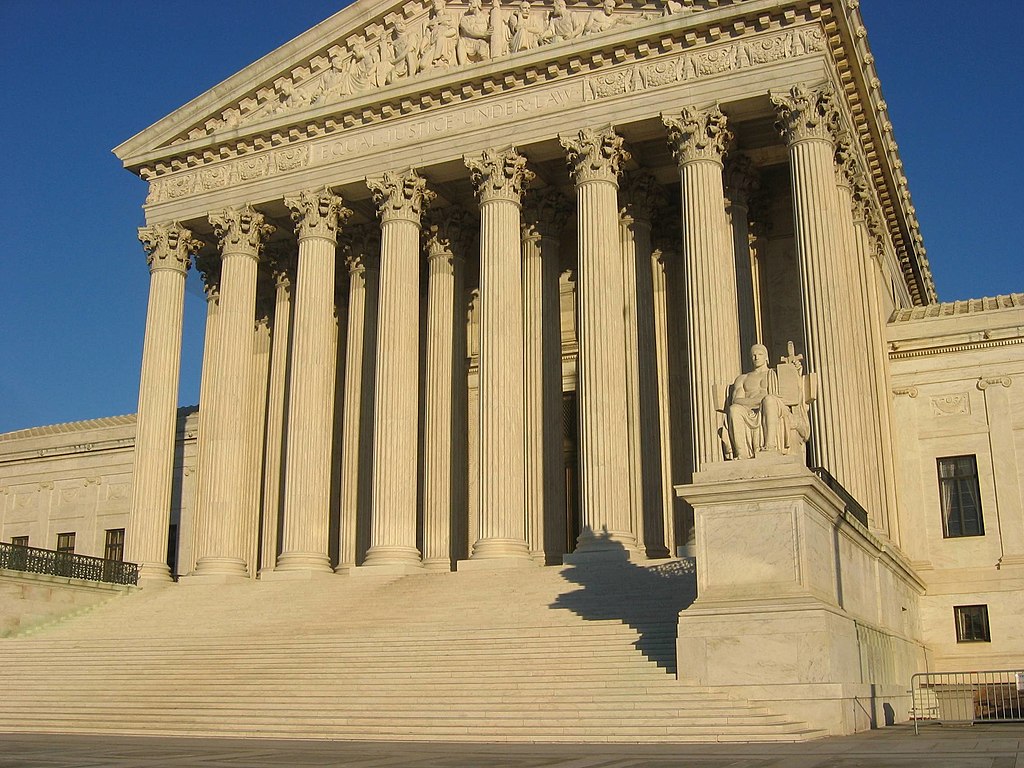
The emergency request first goes to Chief Justice John Roberts, who handles applications arising from the District of Columbia Circuit. He may act on the request himself or refer it to the full court, as is customary in major disputes involving a sitting administration.