President Donald Trump says his decision to attend this week’s NATO summit in Ankara, Turkey, comes down to one person: Turkish President Recep Tayyip Erdoğan.
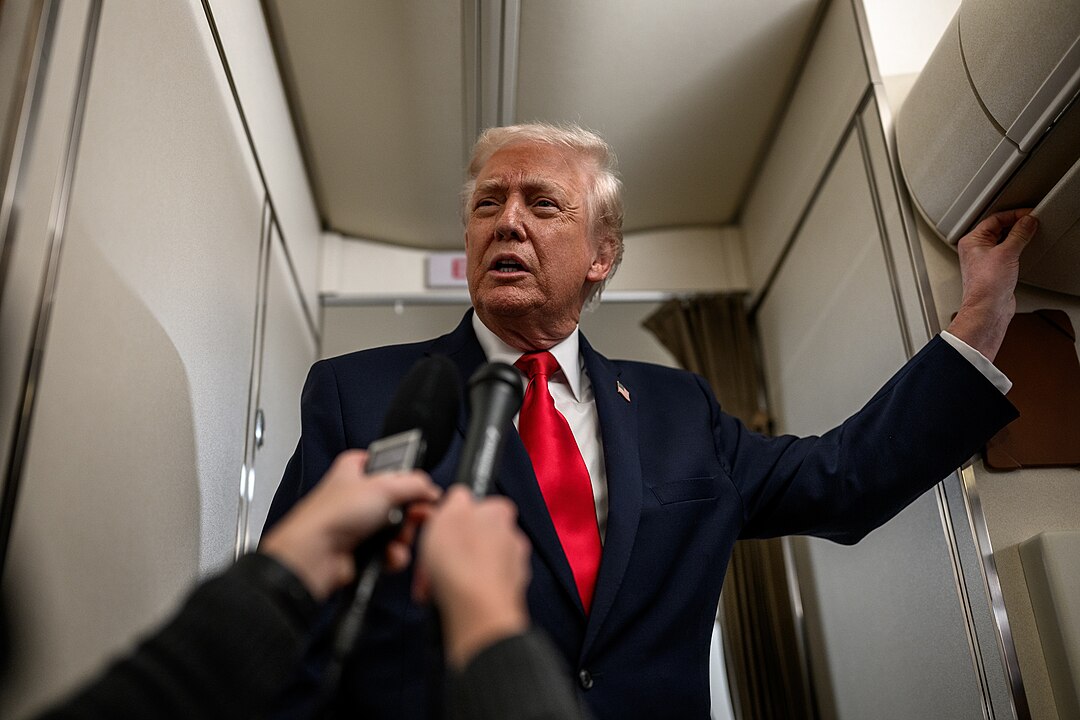
“I’m going because of Erdoğan,” Trump told reporters on June 24, describing the longtime Turkish leader as “a friend” and “a respected leader.” Trump also suggested that closer defense cooperation between the United States and Turkey could be on the horizon, fueling speculation that one of NATO’s most complicated alliances may be entering a new phase.
The summit begins Tuesday in Ankara and is expected to include a bilateral meeting between Trump and Erdoğan.
His remarks signal a notable shift in tone after years of strained relations between Washington and Ankara.
From Sanctions to Strategic Partner
Relations between the two NATO allies deteriorated dramatically after Turkey purchased Russia’s S-400 air defense system in 2019. The purchase prompted the United States to remove Turkey from the multinational F-35 fighter jet program and impose sanctions on Turkey’s defense procurement agency the following year.
Those disputes have not dissolved. Turkey still possesses the Russian-made missile system, continues to pursue a more independent foreign policy than many NATO allies, and has maintained positions that frequently diverge from Washington’s.
Yet analysts say the geopolitical landscape has changed dramatically.
Russia’s war in Ukraine, growing instability across the Middle East, and renewed focus on collective defense within NATO have elevated Turkey’s strategic importance despite lingering disagreements.
Former U.S. Ambassador to Turkey James Jeffrey, who also served as Trump’s special representative for Syria during the president’s first term, argued that Turkey has become indispensable to American strategy.
“Turkey is crucial to the Trump administration,” Jeffrey told Fox News Digital.
White House spokeswoman Anna Kelly echoed that view, saying Trump has “a great relationship” with Erdoğan, whom she described as “an incredible partner in the region.”
More Than a Personal Relationship
Jeffrey acknowledged that the personal rapport between Trump and Erdoğan is genuine.
“The first reason, which is unique to Trump, is he really likes Erdoğan, and Erdoğan likes him,” Jeffrey said. “It’s the idea of a tough guy who is decisive.”
But he argued the relationship extends beyond personality.
According to Jeffrey, Turkey’s military strength, geographic position, and willingness to project power make it “essential to maintaining the U.S. perimeter around Eurasia.”
That assessment comes as NATO shifts back toward its traditional focus of deterring major military powers after decades spent emphasizing counterterrorism operations.
Hudson Institute Senior Fellow Can Kasapoğlu said that renewed emphasis places greater value on countries capable of contributing significant military power.
“When the alliance is back to its Cold War default, the question of what you are bringing to the table is getting more important,” he said.
“The nations bringing hard-power capability to NATO are going to get VIP treatment.”
Turkey fields NATO’s second-largest military after the United States. It also controls the Bosporus and Dardanelles straits—critical waterways connecting the Black Sea to the Mediterranean—and borders Syria, Iraq and Iran.
Those geographic advantages have become increasingly significant since Russia invaded Ukraine.
Jeffrey argued Turkey has played a pivotal role by enforcing the 1936 Montreux Convention, which limited Russian naval reinforcements entering the Black Sea, supplying Bayraktar drones to Ukraine early in the conflict, and serving as an intermediary between Moscow and Kyiv.
“You can’t contain Russia in the Black Sea without Turkey,” he said.
He also credited Erdoğan’s government with backing Syrian opposition forces that ultimately helped topple Bashar al-Assad’s regime, weakening both Iran and Russia’s influence in the region.
Lingering Concerns Remain
Despite Turkey’s growing strategic value, significant obstacles remain to any broader defense reset.
Critics point to Erdoğan’s continued support for Hamas following the October 7, 2023, attacks in Israel, Turkey’s retention of the Russian S-400 system, and Ankara’s efforts to strengthen ties with organizations such as BRICS and the Shanghai Cooperation Organization—groups led by China and Russia.
Sinan Ciddi, a senior fellow at the Foundation for Defense of Democracies, noted that Turkey is the only NATO member that has sought closer ties with both organizations while simultaneously pushing for expanded access to advanced American military technology.
Ciddi argued that congressional opposition, rather than the White House, may ultimately prove to be the greatest obstacle to deeper military cooperation.
The Trump administration has already encountered resistance over a proposed $700 million arms sale to Turkey.
Rep. Gregory Meeks (D-N.Y.), the ranking Democrat on the House Foreign Affairs Committee, criticized the State Department for moving ahead with the sale without sufficiently addressing concerns surrounding Turkey’s continued operation of the Russian-made S-400 system.
Jeffrey distinguished that proposal—which involves F110 fighter engines—from the more politically sensitive question of restoring Turkey to the F-35 program.
He argued that allowing Turkey to operate America’s fifth-generation stealth fighter alongside the Russian S-400 presents a genuine technical and intelligence concern because the missile system could potentially gather sensitive data about the aircraft’s capabilities.
READ NEXT: Trump Departs For NATO Summit